Commercial Building Demolition and Industrial Teardowns Across the Bay Area
We take down the commercial buildings the Bay Area is full of, from tilt-up warehouses and aging office parks to strip centers and corner fuel stations, and hand back a cleared, graded pad ready for whatever gets built next.
What Commercial Demolition Covers for Bay Area Property Owners
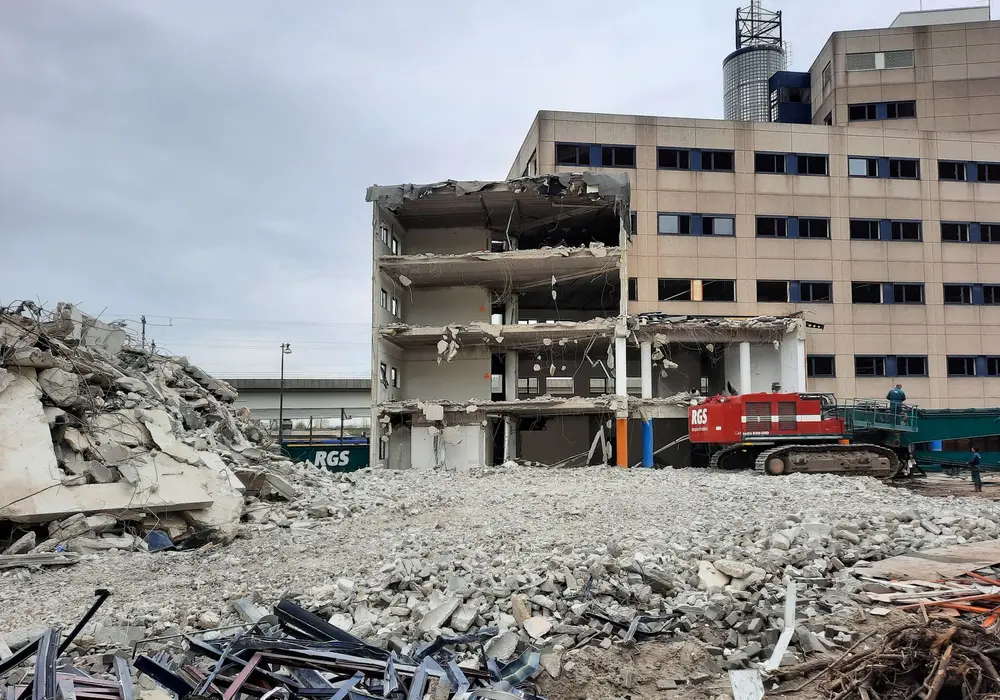
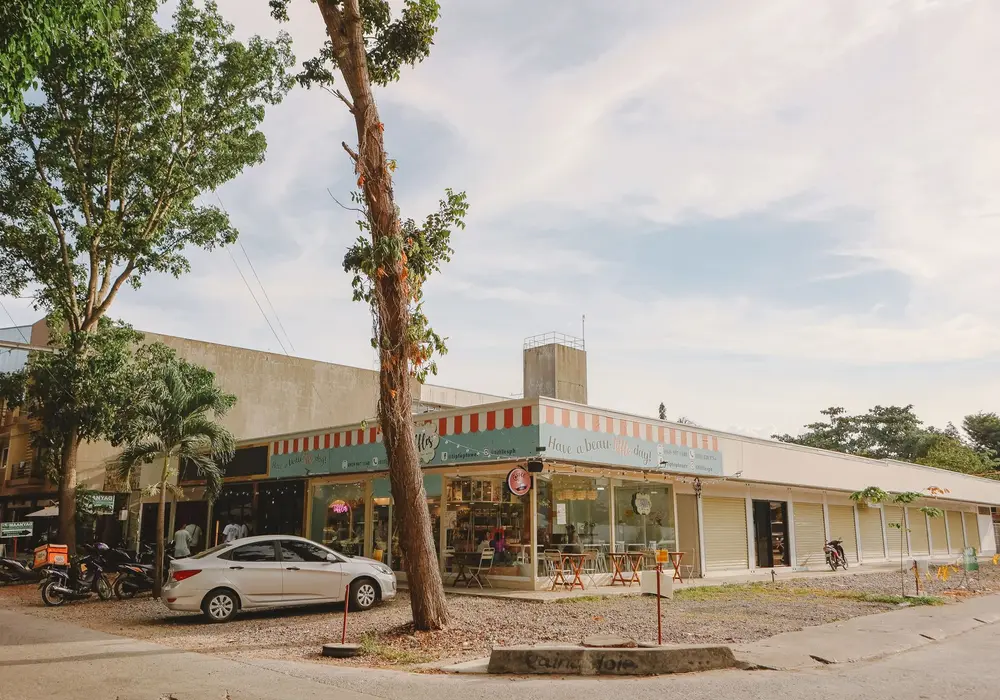
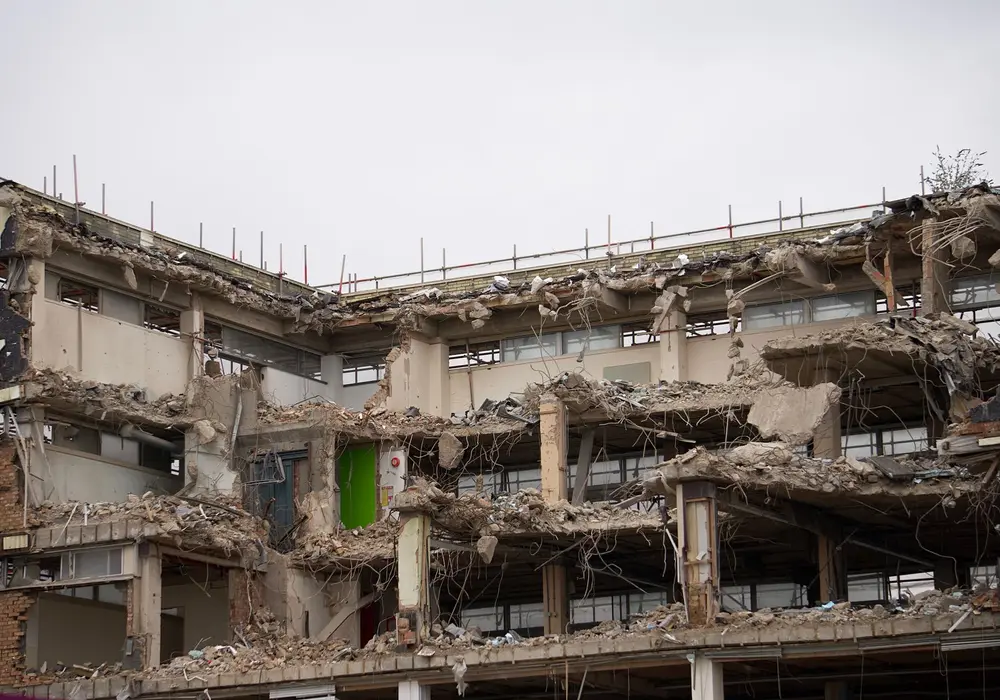
Commercial demolition is the removal of any building put up for business use or for more than a handful of households. In practice that splits into seven kinds of jobs. Warehouse and industrial demolition handles tilt-up concrete shells, manufacturing plants and the R&D buildings that fill the flats from Milpitas up through Hayward and San Leandro. Office building demolition covers low-rise campus buildings and older mid-rise blocks. Retail and strip mall demolition clears shopping centers, often a few bays at a time so the remaining stores can keep trading.
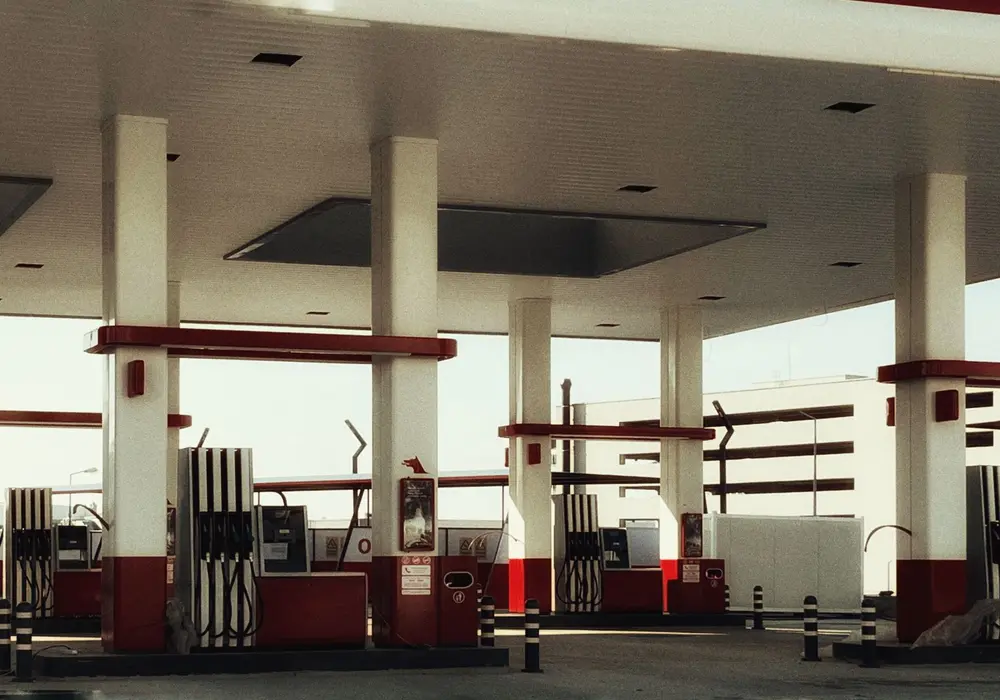
Restaurant demolition deals with hoods, ductwork, grease interceptors and walk-in boxes before the walls come down. Gas station demolition removes canopies, dispensers and the kiosk, and we coordinate the fuel tank removal that the fire department or county environmental health agency permits and inspects. Apartment and multifamily demolition takes down garden complexes, fourplexes and larger wood-frame buildings. Steel structure demolition dismantles pre-engineered metal buildings, mezzanines and structural frames. Each has its own page. This one covers what they share.
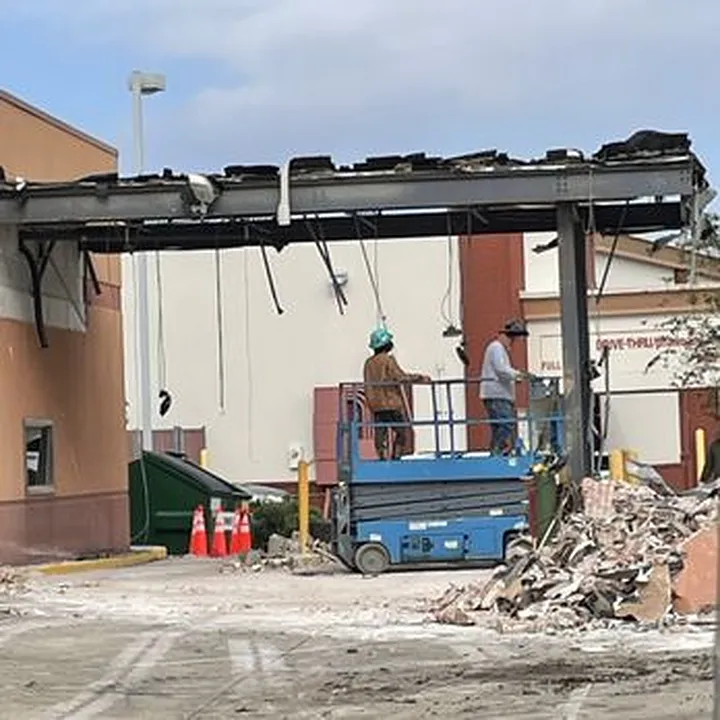
Crew on a scissor lift taking down the canopy of a commercial building
Commercial Demolition Equipment and Methods Matched to the Structure
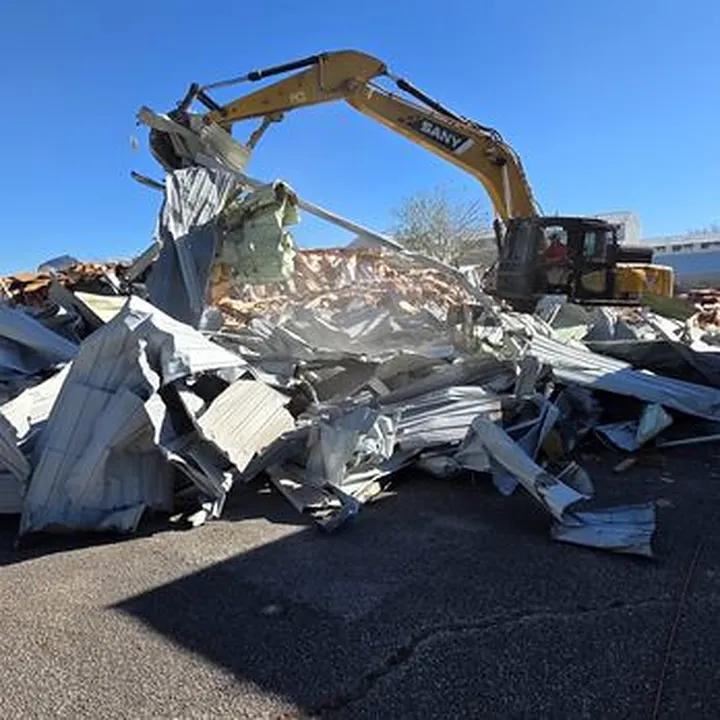
Machine choice follows the building. A one-story wood-frame retail bay comes apart with an excavator and grapple in a way that would be reckless on a two-story tilt-up, where each concrete panel is braced by the roof diaphragm and has to be laid down in a planned order. Reinforced concrete calls for a pulverizer or concrete processor that crushes the material and frees the rebar. Steel frames want a mobile shear that cuts members without sparks.
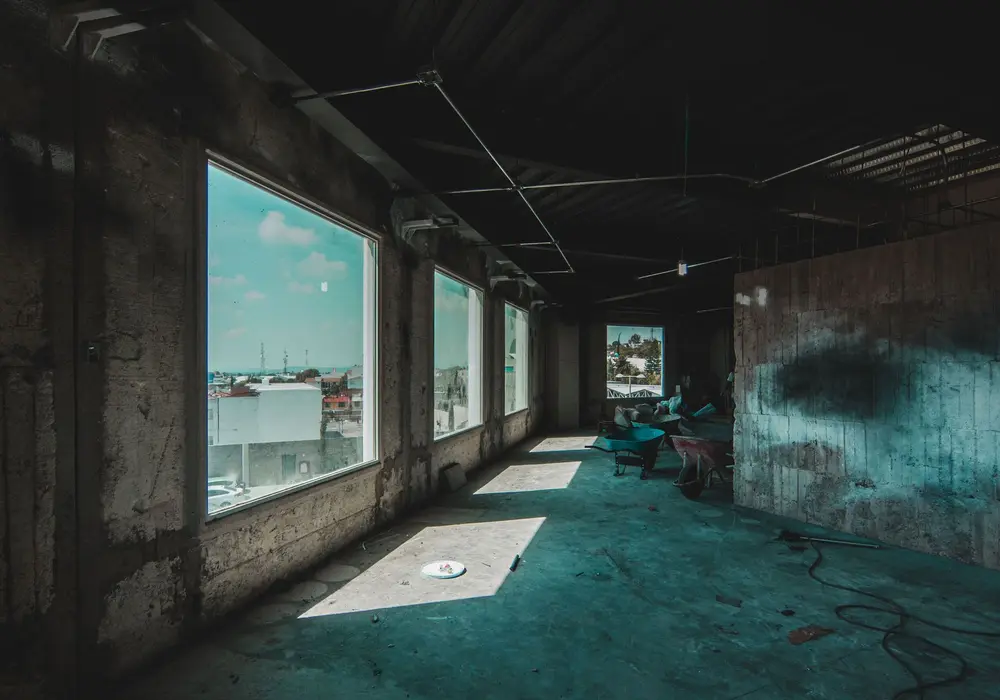
Hand work still matters on commercial jobs. Crews strip interiors by hand and with small machines before the heavy equipment arrives, and where a building shares a wall with a neighbor, the last few feet next to that wall are often taken apart piece by piece.
Excavator with thumb or grapple for wood framing, roofing and sorting debris
Hydraulic shear and concrete processor for steel and reinforced concrete
Hydraulic breaker for slabs, footings, loading dock walls and equipment pits
Skid steers and mini excavators for interior strip-out and cramped lots
Wire saw, flat saw and core drill where part of a structure must stay
Torch cutting for heavy steel connections once coatings have been tested
How a Commercial Demolition Project Is Sequenced From Survey to Rough Grade
The work starts long before a machine shows up. A certified asbestos consultant surveys the building and samples suspect materials, and lead paint is tested where coatings will be disturbed. Commercial buildings also hide regulated items a house rarely has: fluorescent lamp ballasts that may contain PCBs, mercury thermostats, emergency lighting batteries, refrigerant in rooftop units, and chemicals a past tenant left behind. Abatement goes to a certified abatement contractor that we schedule, and their clearance comes before our demolition.
Utilities are cut next. Gas and electric go through PG&E in most cities, Silicon Valley Power in Santa Clara, City of Palo Alto Utilities or Alameda Municipal Power. Water service, fire sprinkler lines and backflow devices are shut off with the water purveyor and fire department, and the sewer lateral is capped and inspected. After that comes fencing and erosion control, the soft strip of interiors, structural demolition from the top down, slab and foundation breakout, haul-off and sorting, and finally backfill, compaction and a rough grade.
Commercial Demolition Permits, BAAQMD Notification and CALGreen Diversion
A demolition permit comes from the city building division, or from the county when the parcel sits in unincorporated land. Cities usually want proof that utilities are disconnected, a copy of the asbestos survey, and evidence that the air district has been notified. Under BAAQMD Regulation 11 Rule 2, a building cannot be demolished until the survey is complete and the regional air district has received notice, even if no asbestos turned up. We prepare and file that notification as part of the job.
CALGreen, the state green building code, sets a floor: 65% of the nonhazardous debris by weight has to be recycled or reused rather than buried. Plenty of cities in the region enforce that by holding a deposit against a waste management plan filed with the permit, then releasing the money when weight tickets prove the diversion. Older commercial buildings may also trigger historic review, and landscaped office campuses often carry protected trees that need their own permit. We check those conditions before the permit application goes in, so a surprise does not stall the schedule halfway through.
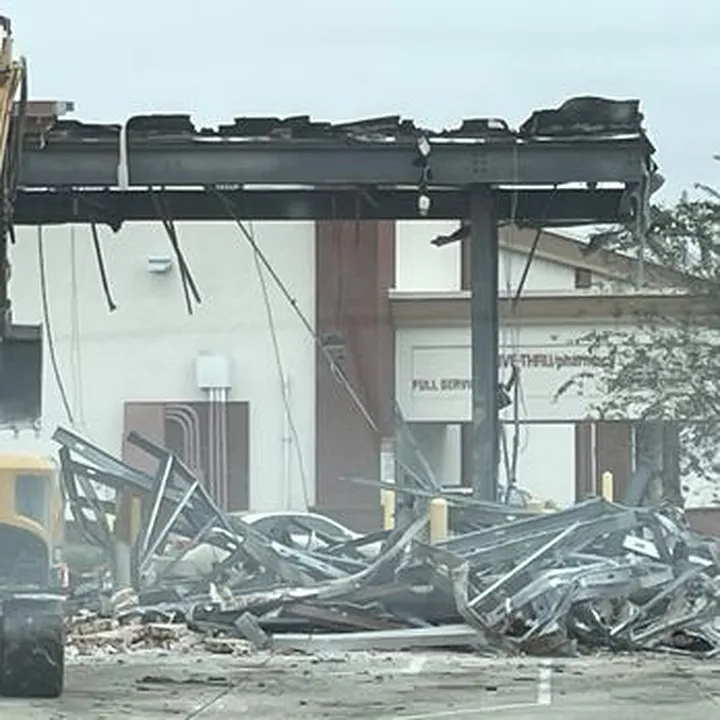
Tilt-up warehouses, manufacturing plants and R&D buildings demolished in a planned panel sequence, with process piping, equipment pits, trench drains and thick slabs broken out and recycled.
Low-rise campus buildings and older multi-story offices demolished with fireproofing and ceiling surveys, glazing and curtain wall removal, raised floor and data room strip-out, and phasing beside occupied buildings.
Strip centers, single retail buildings and shopping plazas demolished in phases around open tenants, with demising wall separation, utility rerouting, sign and canopy removal, and parking lot breakout.
Freestanding restaurants and drive-thru pads demolished with hood and duct removal, walk-in cooler dismantling, refrigerant recovery, grease interceptor removal, gas line capping and pad clearing.
Fuel station canopies, dispensers, kiosks, car washes and islands removed, with underground tank removal coordinated under fire department or county oversight and the site backfilled to grade.
Duplexes, fourplexes, garden apartments and larger wood-frame complexes demolished with unit-by-unit strip-out, multi-meter utility disconnects, lead and asbestos coordination, and careful work beside close neighbors.
Pre-engineered metal buildings, structural steel frames, mezzanines, crane runways and canopies dismantled with mobile shears and controlled cutting, coatings tested first, and the steel recycled as scrap.
Advantage
What Sets Our Commercial Demolition Crews Apart
7Commercial Demolition Services
01
Abatement Scheduled Ahead of Commercial Demolition
We line up the asbestos survey, the certified abatement contractor and the air district notice so the hazardous work is cleared before our machines arrive, instead of leaving the owner to coordinate three separate firms.
02
Recycling Sorted on the Commercial Site
Steel, concrete, wood and cardboard are separated as the building comes down, which keeps diversion high, earns scrap credit and produces the weight tickets your city asks for at final.
03
Equipment Sized to the Commercial Lot
A tight retail pad between two open stores gets compact machines and hand work. A large industrial parcel gets long-reach excavators and breakers. The equipment fits the site rather than the other way around.
04
Neighbors and Tenants Notified Before Heavy Work
Adjacent businesses and residents hear from us before breaking, loading and street work begins, so deliveries, customers and shared walls are planned for rather than discovered on the first loud morning.
What Drives the Cost of Commercial Demolition in the Bay Area
No two commercial buildings price alike, and any number quoted before someone walks the site is a guess. The real cost comes from a handful of factors, and the biggest swing is usually what the hazardous materials survey finds. A building with clean drywall and a newer roof is a very different job from one with sprayed fireproofing, asbestos floor tile under carpet and old pipe insulation in the ceiling space.
Scrap value works in the owner's favor. Structural steel, copper wiring, aluminum storefronts and rooftop units all have resale value at the recycler, and that credit is reflected in the bid.
Building size, height and construction type (wood, tilt-up, masonry, steel)
Scope of asbestos, lead and other abatement before demolition
Slab thickness, pits, basements, piles and buried foundations
Access, street frontage and how close neighbors stand
Permit conditions such as traffic control, hauling routes or limited hours
Whether the site ends at rough grade or needs import fill and compaction testing
How Long Commercial Demolition Takes and What Changes the Schedule
On most commercial projects the machine time is the short part. Calendar time goes to survey lab results, abatement, permit review and, very often, the utility company scheduling a meter pull or a gas service cut at the main. Those steps can run in parallel if they start early, and they rarely can be rushed once they are late.
Weather plays a role too. During the rainy season, erosion control has to be in place and maintained, and the expansive clay found across much of the valley floor and East Bay turns heavy equipment work into a mess after a storm. Owners can shorten the schedule by sending old building drawings, clearing leftover tenant inventory, and requesting utility disconnects the day the project is approved. We give a realistic schedule after the site walk rather than a promised finish date.
Recycling Concrete, Steel and Wood From Commercial Demolition Sites
Commercial buildings are heavy, and most of that weight is concrete, which is also the easiest material to keep out of a landfill. Slabs, footings, tilt-up panels and parking areas are broken, cleared of rebar, and either crushed into recycled base on site or trucked to a recycler. When the geotechnical engineer approves, crushed concrete can go back into the same lot as fill under the new building pad.
Metals are separated as they come down: structural steel, decking, ductwork, copper and aluminum each go to scrap. Clean dimensional lumber, cardboard, gypsum board and some roofing materials have outlets too. Every load leaves with a weight ticket, and those tickets build the diversion report the city needs before it refunds a waste deposit and signs off the permit.
Safety, Dust Control and Neighbor Considerations on Commercial Demolition Jobs
Commercial sites usually sit on busy streets or beside other working businesses, so the job has to be run with them in mind. Perimeter fencing goes up with a privacy screen, water trucks or misting lines keep dust down whenever material is broken or loaded, and the street out front is swept so trucks do not track mud. Where trucks cross a sidewalk or use a traffic lane, flaggers and an approved traffic control plan keep pedestrians separated from the work.
Noisy work stays inside the hours the city allows. On blocks where a building shares a wall with an occupied neighbor, we talk with that owner before demolition, document the wall's condition, and take the attached section down by hand. Adjacent tenants hear from us in advance about the days when breakers and large trucks will be running.
Commercial Demolition Available Throughout the San Francisco Bay Area
Do I need an asbestos survey before demolishing a commercial building?
Yes. The air district's asbestos rule, BAAQMD Regulation 11 Rule 2, makes an inspection by a certified asbestos consultant and advance notice to the district conditions of tearing down any building. The city will also ask for the survey before it issues the demolition permit. We arrange the survey and file the notification.
Who handles utility disconnects for a commercial demolition?
We coordinate them, but the utilities do the work at the meter or the main. That means PG&E or the local municipal utility for gas and electric, the water agency for water and fire service, and a city inspection when the sewer lateral is capped. Starting these requests early is the best way to protect the schedule.
Can part of a shopping center come down while other stores stay open?
Often it can. The building is separated at a demising wall, utilities that feed the remaining tenants are rerouted or protected, and fire lanes, parking and storefront access are kept open behind fencing. The phasing is planned with the owner and the city before work starts.
What happens to the concrete slab and foundations?
They are broken out with a hydraulic breaker or processor, the rebar is pulled for scrap, and the concrete is crushed for reuse as base or hauled to a recycler. If the new project plans to reuse part of the slab or foundation, that portion can be saw-cut and left in place.
Do you remove underground fuel tanks at commercial sites?
Fuel tank removal runs under a permit from the fire department or county environmental health, whichever administers tanks locally, and an inspector is present when the tanks come out and the soil is sampled. We coordinate the tank work with the demolition schedule so the excavation, inspection and backfill happen in the right order.
What should I include when I request a commercial demolition quote?
Send the property address, building type and approximate size, whether it is vacant, and any surveys, drawings or environmental reports you already have. Mention whether the slab and foundations stay or go. Expect an answer to a form request within one business day, and the walk-through gets scheduled from there.
Get a Commercial Demolition Quote for Your Bay Area Property
Call or request a quote with the address and a short description of the building. We will walk the site, review any surveys you have, and lay out the scope, the permit path and the schedule drivers.


 Warehouse & Industrial Demolition