

Fire Damage Demolition
Fire-Damaged Home Demolition and Debris Removal in the Bay Area
After a house fire, the structure is unsafe, the debris is not ordinary debris, and the insurance file controls the timeline. We take down what has to go, handle ash and hazards correctly, and document each step for your claim.
What Happens Between the Fire and Fire Damage Demolition
Demolition does not come right after a fire. The fire department and sometimes an investigator must release the site. The insurance adjuster needs to see and document the damage, and often a structural engineer or the city's building inspector decides whether the building can be repaired or must come down. A building official may post the house as unsafe, which restricts who can enter.
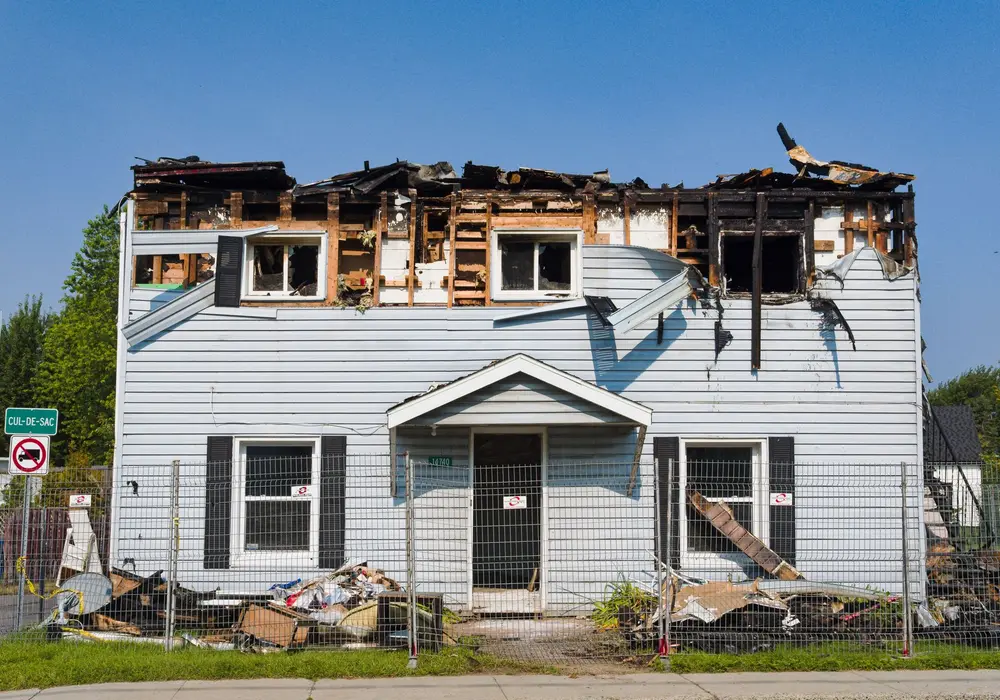
In the meantime, the site must be secured. Burned homes attract trespassers, and partly collapsed walls can fall in wind. Temporary fencing, boarded openings and tarps over exposed areas protect the property and the neighbors. We can install those measures quickly, since they are often required before the full demolition scope is approved.
Working With Your Insurance Adjuster on the Demolition Scope
Insurance policies often treat debris removal as its own line item, separate from rebuilding. The adjuster will want a clear scope: what is being removed, what is staying, how hazardous materials are handled, and how debris is disposed of. A vague estimate tends to slow approval, while a detailed one makes the conversation easier.
We prepare a demolition scope that lists each component, explains the method, and separates hazardous material testing and abatement coordination from general demolition. Photos before, during and after the work become part of your claim record. If the adjuster needs to see the site again before work starts, we schedule around that visit instead of beginning early and losing evidence.
- Line-item scope matching how adjusters review claims
- Hazmat testing and abatement shown separately
- Photo record before, during and after demolition
- Facility receipts for debris disposal and recycling
Ash, Asbestos and Hazardous Debris After a House Fire
Fire changes the materials in a house. Ash can hold heavy metals from paint, wiring and electronics. Older homes may contain asbestos in siding, roofing, flooring, duct wrap or ceiling texture, and fire can break those materials down so fibers release more easily. Burned plastics and household chemicals leave residues that should not be mixed with clean debris.
Before demolition, a certified asbestos consultant samples the remaining materials, and BAAQMD Regulation 11 Rule 2 still applies, including notification to the air district. Where asbestos or other regulated materials are found, a certified abatement contractor removes or handles them, coordinated with our demolition. Ash and debris are kept wet during removal to limit dust, loaded with care, and taken to facilities that accept fire debris.
How Fire-Damaged Home Demolition Works
Secure the Fire-Damaged Site
Once the fire department releases the property, we install fencing, board openings and cover exposed areas. The site stays safe while the adjuster, engineer and building inspector complete their reviews.
Build the Demolition Scope With the Insurer
We prepare a line-item scope covering removal, hazardous material testing, abatement coordination and disposal, and adjust it to match the adjuster's findings and the engineer's recommendations.
Test, Abate and Remove Fire Debris
A certified consultant samples for asbestos, abatement is completed where needed, and the damaged structure is demolished with ash kept wet and debris loaded for approved facilities.
Clear the Lot and Document the Work
Foundations, flatwork and damaged trees are removed as directed, erosion control goes in, and you receive photos, receipts and test results for your claim and permit file.
Partial Fire Damage: Removing Only What Burned
Not every fire destroys the whole house. Kitchen fires, garage fires and fires that started in one wing often leave much of the structure sound. In those cases, the engineer or insurer may approve removing only the damaged portion and rebuilding it. That is selective work: the burned rooms and charred framing come out, while the rest of the house is protected and stays standing.
The boundary is rarely clean. Smoke and heat damage extend beyond what is visibly burned, and charred framing hides inside walls. We remove material back to sound wood as directed, shore where the structure needs it, and seal the cut line against weather and smoke migration. The rest of the house remains workable for the restoration contractor.
Wildfire Debris Removal in North Bay and Hillside Areas
Wildfires in Sonoma, Napa and other fire-prone parts of the region have shown how debris removal after a large disaster differs from a single house fire. After declared disasters, government programs may run debris removal for eligible properties, with their own rules, soil sampling and sign-off. Owners who opt out or fall outside those programs often must meet equivalent standards on their own, under the county's direction.
On hillside properties, wildfire debris removal also means thinking about erosion. Burned slopes shed soil quickly in the first rains, and a cleared lot can send sediment into creeks and onto neighbors. Erosion control measures go in as part of the work. Retaining walls, chimneys and foundations damaged by heat are evaluated, since some can remain and others are unsafe.
Clearing a Burned Lot to Rebuild
When the house is a total loss, the end goal is the same as any tear-down: a clean lot ready for a new building. The difference is the care in removing ash, the testing that may be required before the lot is cleared for rebuilding, and the condition of the foundation. Fire-damaged foundations are often removed because heat weakens concrete and rebar, though an engineer makes that call.
Utilities are confirmed disconnected and capped. Trees damaged by fire are assessed, since some will not survive and may fall later. The lot is graded, erosion control is left in place, and you receive documentation of disposal and any testing results for your insurer and the building department.
Related Residential Demolition Services
Residential Demolition
House Demolition
Garage Demolition
Shed & Outbuilding Removal
Deck & Patio Cover Demolition
Swimming Pool Removal
Mobile Home Demolition
Partial Home Demolition
Chimney Removal
Fire-Damaged Home Demolition Across the San Francisco Bay Area
How soon after a fire can demolition start?
Only after the fire department releases the site and the insurer has documented the damage. Permits, the asbestos survey and utility disconnects follow. Securing the site can happen right away.
Does insurance pay for fire debris removal?
Many homeowner policies include debris removal coverage, sometimes as a separate limit. Your adjuster and policy decide what is covered; we provide the detailed scope and records they ask for.
Is fire debris hazardous?
It can be. Ash may contain heavy metals, and older building materials may contain asbestos. Testing comes first, and debris is handled and disposed of according to what the tests show.
Can part of my house be saved after a fire?
Often, yes. If an engineer confirms the rest of the structure is sound, we remove only the damaged sections and protect what remains for restoration.
Get a Fire Damage Demolition Quote
Phone (510) 826-3578, or use the quote form and include your claim adjuster's name if one has been assigned. Form requests get a reply within one business day.
- Email: contact@sfbayareademolitioncontractor.com
- Serving all 9 Bay Area counties from San Jose