

Earthwork and grading
Excavation and Grading for Bay Area Building Pads, Slopes and Driveways
Every foundation depends on the dirt under it. We excavate, move and compact soil to the soils engineer's recommendations and the approved grading plan, from flat valley lots with expansive clay to benched hillside pads above the bay.
Why Excavation and Grading Starts With the Soils Report
On a building project, the geotechnical report is the instruction manual for the dirt. It tells us how deep to remove weak or expansive soil, what compaction percentage each layer needs, how thick each lift can be, whether imported fill must meet a specification, and how far the work has to extend past the building line. The grading plan, prepared by the civil engineer, sets the finished elevations, slopes and drainage paths.
We read both before quoting. A lot that looks like a simple scrape may need two or three feet of overexcavation under the whole pad, which changes the export volume, the trucking and the schedule. Reading those documents early prevents the most common grading dispute: a contractor who priced the surface and then discovers the real scope once the soils engineer shows up.
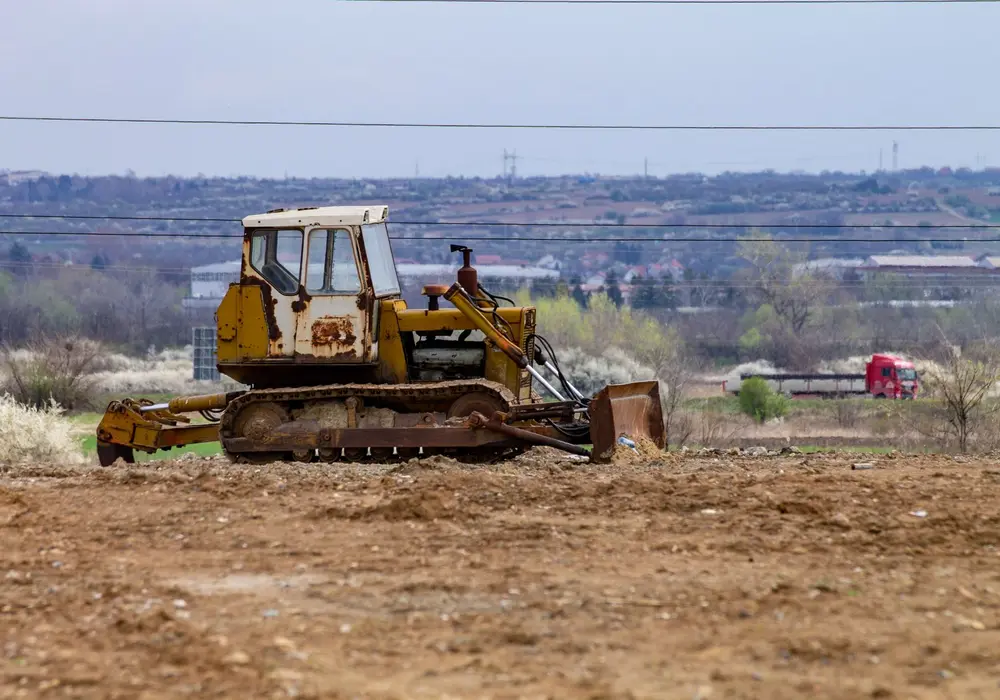
Grading Expansive Clay Soils in the Bay Area
Much of the flat land around the bay sits on clay that swells when wet and shrinks as it dries, from the Santa Clara Valley floor to the East Bay flats around Fremont and Hayward. Build a slab directly on that soil and seasonal movement can crack floors and rack door frames. That is why many geotechnical reports call for removing the top layer and replacing it with compacted fill, or moisture conditioning the native clay before it is placed back.
Clay is also stubborn to work. It sticks to buckets and tracks when wet, turns hard as brick in late summer, and resists compaction at the wrong moisture content. Crews add water or let soil dry out to hit the target range, then compact in thin lifts. The soils engineer or a testing firm checks density as each lift goes down, and failing areas are reworked before more soil goes on top.
Cut, Fill, Import and Export on a Grading Job
A balanced site costs the least to grade: soil cut from high areas fills the low ones and nothing leaves. Few infill lots work out that way. Basements, overexcavation and underground parking generate export, while low lots or sites with poor native soil need imported fill. Moving dirt off site means truck trips, tipping or receiving site fees, and sometimes testing to show the soil is clean enough for its destination.
Imported fill has its own requirements. The soils engineer may specify a non-expansive material or a particular gradation, and many projects require documentation of where it came from. We track volumes by truck count and grade checks so the owner can compare actual quantities to the estimate. Topsoil stripped at the start is often stockpiled and reused for landscape areas instead of being exported and bought back later.
- Cut and fill balanced on site where the plan allows
- Export soil tested when the destination requires it
- Imported fill matched to the soils specification
- Topsoil stockpiled for later landscape use
How Excavation and Grading Works, Step by Step
Read the Grading Plan and Stake the Site
We review the grading plan, soils report and permit conditions, call 811 for utility marks, and have the surveyor set grade stakes. Erosion control and the construction entrance go in before the excavation starts.
Strip and Excavate to the Required Depth
Topsoil and organics are stripped and set aside, then the excavator cuts to the depth the geotechnical engineer specified. The engineer observes the exposed bottom before any fill is placed back on the grading pad.
Place and Compact Grading Fill in Lifts
Fill goes back in thin layers at the right moisture content and is compacted with rollers or plate compactors. Density tests on each lift confirm the soil meets the specification before the next layer goes down.
Fine Grade for Drainage and Close the Permit
Final grades are cut to plan so water flows away from the building. The engineer and inspector sign off, and we hand over compaction records and haul quantities for the project file.
Hillside Grading, Benching and Drainage
Hillside lots in the Oakland and Berkeley hills or on the slopes of Marin follow different rules than flat ground. New fill cannot just be dumped onto a slope. The engineer typically calls for a keyway cut into firm material at the toe, followed by benches stepped into the hillside so each layer of fill locks into native soil. Subdrains behind fill slopes carry groundwater away before it builds pressure.
Drainage is the point of most finish grading work. Pads slope away from the future foundation, swales carry runoff to approved outlets, and nothing is allowed to concentrate water on a neighbor's property or the top of a slope. Many hillside jurisdictions add geologic review, restrict grading in the rainy season and require erosion control to be in place before October. We build the schedule around those limits.
Grading Permits, Inspections and Air District Dust Rules
Most Bay Area cities and the counties for unincorporated areas require a grading permit once earthwork passes a volume threshold, changes drainage, or happens on a slope, with the threshold set locally. Larger jobs need engineered plans, a soils report and inspection at key stages, such as keyway excavation and final grade. The permit stays open until the engineer certifies the work and the inspector signs off.
Dust control is part of every grading job. Exposed soil is watered during cutting and loading, haul trucks are covered, and street track-out is cleaned. In parts of the region underlain by serpentine rock, naturally occurring asbestos can be present, and BAAQMD may require a dust mitigation plan before grading begins in those mapped areas. We check the parcel against those maps during planning.
Excavating Safely Near Utilities, Neighbors and Property Lines
Before any bucket goes into the ground, 811 is called so public utilities mark their lines, and where marks are uncertain the crew potholes by hand or with a vacuum excavator to find the exact depth. Private lines on the property are traced from the plans and from what we see on site. Excavations deeper than five feet need protective systems for workers, and some basement or below-grade jobs require an engineered shoring design.
Neighbors are the other boundary. Digging near an adjacent foundation can undermine it, so the engineer sets limits on how close and how deep we can excavate without support. On tight lots we watch for vibration from compaction equipment, choose smaller plate compactors where needed, and keep spoil piles away from shared fences.
Related Site Clearing Services
Site Clearing
Land Clearing
Lot Clearing for New Construction
Tree & Stump Removal
Debris Hauling
Construction Cleanup
Brush & Defensible Space Clearing
Excavation & Grading Across the San Francisco Bay Area
Do I need a grading permit for my project?
It depends on how much soil moves, whether the lot is on a slope and whether drainage changes, and every city sets its own trigger. Moderate leveling for a patio may not need one, while a new house pad or hillside fill almost always does. We check the local rule before scheduling.
What is overexcavation and why does my soils report require it?
Overexcavation means removing soil below the planned foundation level and replacing it with compacted fill. Reports call for it when the native soil is expansive, loose or uneven, so the new building sits on a uniform, engineered layer instead of material that will move.
Who does the compaction testing?
The geotechnical engineer of record or an independent testing firm hired by the owner. We schedule the work so they can test each lift and observe key stages, and we rework any area that does not meet the specified density.
Can grading happen during the rainy season?
Some jurisdictions restrict or prohibit grading in winter, especially on hillsides, and saturated clay is very hard to compact. When winter work is allowed, it needs stronger erosion control and flexible scheduling around storms. Dry season grading is almost always faster and cleaner.
What happens to the extra soil from my excavation?
Clean soil is reused on site when the plan allows, or trucked to another project or receiving facility. Some destinations require testing first. Mixed or contaminated soil follows separate disposal rules, and we coordinate that with the owner and the appropriate agency.
Get a Quote for Excavation and Grading
Send your grading plan status, soils report and project address. We review the documents and reply within one business day; you can also call (510) 826-3578.
- Email: contact@sfbayareademolitioncontractor.com
- Serving all 9 Bay Area counties from San Jose