

Pre-Demolition Hazmat Survey
Pre-Demolition Hazmat Survey for Bay Area Buildings
Every demolition in the Bay Area starts with knowing what is inside the walls. We arrange a pre-demolition hazardous materials survey by certified consultants, then use the report to plan abatement, file notifications and price the demolition accurately.
What a Pre-Demolition Hazmat Survey Looks For
An asbestos survey is the legal minimum before demolition in the Bay Area, but a full pre-demolition hazmat survey looks wider. The goal is a written inventory of every material and item in the building that cannot leave with ordinary demolition debris, with its location and quantity. That inventory drives the abatement contract, the waste plan, the air district notice and the order in which our crew takes the building apart.
Commercial and industrial buildings add their own list: hydraulic fluid in elevators and dock levelers, emergency lighting batteries, older exit signs, lab and shop chemicals, and residue in floor drains or sumps. Agricultural buildings can hold pesticide containers and old fuel. A thorough surveyor walks every space, including attics, crawl spaces, roof surfaces and mechanical rooms, because the rooms nobody checked are where demolition surprises come from.
- Asbestos-containing materials, sampled and lab tested
- Lead-based paint on interior and exterior components
- PCB-containing light ballasts, transformers and some older caulks
- Mercury in fluorescent tubes, thermostats and switches
- Refrigerants in HVAC units, walk-in coolers and appliances
- Stored chemicals, paint, batteries and fuel containers
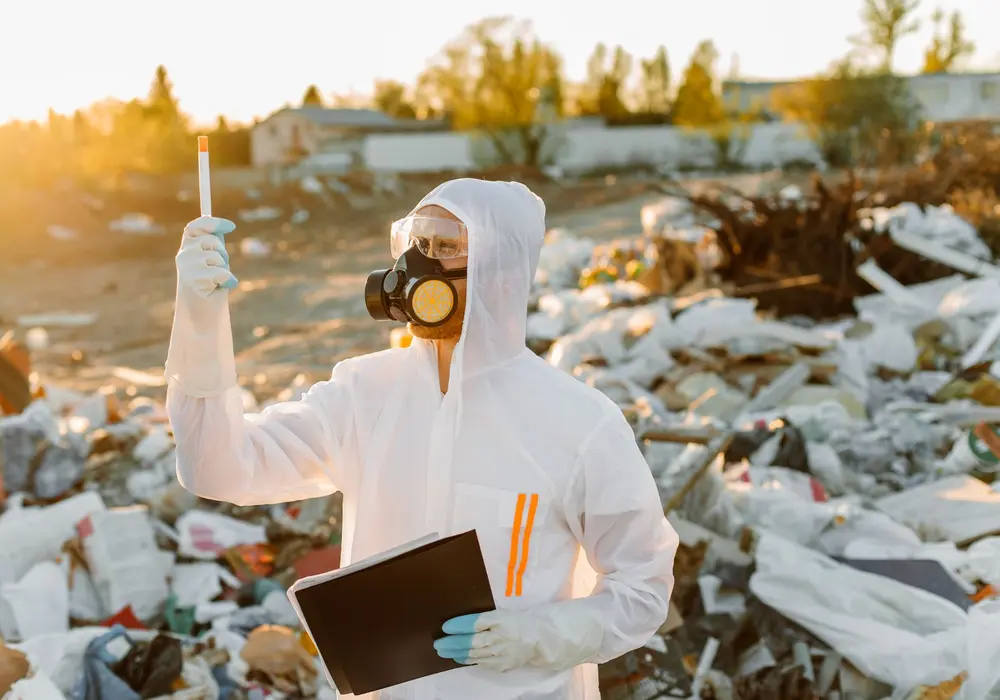
Who Performs the Hazmat Survey and Which Certifications Apply
The asbestos portion is performed by a Cal/OSHA certified asbestos consultant, or by a certified site surveillance technician working under one. Lead paint inspections are done by an inspector or risk assessor certified by the California Department of Public Health. Universal waste and other regulated items are usually inventoried by the same environmental consulting firm. We do not perform the survey and do not hold those certifications; we hire or coordinate the consultant and get the building ready for them.
Getting it ready means more than opening a door. Destructive sampling is part of a proper survey: cutting small openings in drywall, lifting flooring layers, coring roofing. On a building that is coming down, our crew can open walls, pull back carpet, and provide ladders or a lift so the consultant reaches everything. On an occupied building, or one still being sold, sampling is planned to keep damage small, and openings are patched afterward.
Why the Hazmat Survey Comes Before the Demolition Permit and Bid
Under BAAQMD Regulation 11 Rule 2, the asbestos survey has to be completed before demolition, and the demolition notice to the air district relies on it. Many city building departments then ask for evidence of that notice, or for the survey itself, before they issue a demolition permit. When the survey is ordered late, the permit, the abatement and the demolition all slide together. That is why we push for it in the first week of a project.
The survey also keeps a demolition quote honest. Without one, any price is a guess about what is hiding in the building, followed by a change order when the guess is wrong. With one, the abatement contractor bids real quantities, we can plan how long containment will hold up the site, and the owner can compare numbers knowing every bidder assumed the same materials. For someone buying a property to redevelop, a survey before closing reveals costs that belong in the negotiation.
How a Pre-Demolition Hazmat Survey Works, Step by Step
Hazmat Survey Scoping and Site Access
We share the building's age, size, plans and the demolition scope with the consultant, who defines what to sample. Our crew arranges keys, power, ladders or a lift, and opens up areas that need destructive sampling on buildings slated for demolition.
Sampling and Inventory on Site
The certified asbestos consultant samples suspect materials, the lead inspector tests painted surfaces, and the team counts universal waste, refrigerant equipment and stored chemicals. Every space is walked, including roofs, attics and crawl spaces.
Lab Results and the Hazmat Survey Report
Samples go to an accredited lab, and the consultant issues a report listing each material, its location, quantity, condition and result. We review it line by line and ask about any area or quantity that looks incomplete.
Using the Survey for Permits and Demolition
The report supports the air district notification and the demolition permit, sets the abatement contractor's scope, and shapes our demolition and recycling plan. It stays in the job file for the city, the owner and future buyers.
What a Good Hazmat Survey Report Should Include
A useful report is specific. It lists each sampled material with its location, approximate quantity, condition and lab result, and it marks where suspect materials were assumed positive rather than sampled. It separates friable from non-friable asbestos, reports lead results by component, and counts fluorescent tubes, ballasts, thermostats and refrigerant equipment. It states which areas could not be reached and should be checked during demolition. Photos and floor plans help the abatement crew find each item quickly.
We read the report line by line before we price anything. If a quantity looks low, such as a single ceiling texture result standing in for a whole multi-unit building, we ask the consultant to confirm it. If the report skips the crawl space or the roof, we ask why. Catching gaps on paper costs nothing; finding them under an excavator costs days.
Hazmat Surveys for Homes, Commercial Buildings and Partial Demolition
Scope varies by building. A survey for a single-family teardown may take a few hours on site. A multi-story office, a shopping center or a tilt-up campus can take days and produce hundreds of samples. Partial demolition and remodels need a survey too, limited to the areas being disturbed, because the air district rule covers renovation as well as demolition. Fire-damaged buildings call for extra care, since heat changes the condition of materials and ash in the debris can carry asbestos fibers.
Age shapes expectations but does not replace testing. Mid-century ranch homes and 1970s apartment buildings often show asbestos in flooring, wall texture and duct materials, while Victorians lean toward lead paint and old pipe insulation. Buildings from the 1990s onward usually come back cleaner, yet some asbestos products remained legal and appear in newer construction, so the survey is still required. Fluorescent tubes and ballasts, meanwhile, turn up in almost every commercial building regardless of age.
Removing Universal Waste and Refrigerants Before Demolition
Items the survey flags, like fluorescent tubes, PCB ballasts, mercury thermostats and batteries, are pulled before the building comes down and sent to recyclers that accept universal waste instead of riding out in the debris bin. Refrigerant in air conditioners, heat pumps, refrigerators and walk-in coolers has to be recovered by a technician certified under EPA rules before the equipment is scrapped. We schedule that recovery, keep the paperwork in the job file, and only then cut the units loose for metal recycling.
Related Hazardous Material Abatement Services
Hazardous Material Abatement
Asbestos Abatement
Lead Paint Abatement
Mold Remediation
Underground Storage Tank Removal
Septic Tank Removal
Pre-Demolition Hazmat Survey Across the San Francisco Bay Area
Is a hazmat survey required before demolition in the Bay Area?
An asbestos survey by a certified consultant is required under the air district's Regulation 11 Rule 2 before demolition or renovation that disturbs building materials. Lead testing and a universal waste inventory are not always mandated in the same way, but they are standard practice on a well-planned demolition.
How long does a pre-demolition asbestos and lead survey take?
On-site work for a house is often a few hours, while larger commercial buildings can take days. Lab results for asbestos samples typically follow within several days, with rush turnaround available at extra cost. We schedule the survey early so results arrive before the permit is ready.
Can I use an old asbestos survey from when I bought the property?
Sometimes, but often it needs updating. Surveys done for a purchase or remodel may not cover every area or material that demolition will disturb. The consultant reviews the old report and decides whether additional sampling is needed.
Does the hazmat survey damage the building?
Proper sampling is partly destructive: small cuts in drywall, lifted flooring, roof cores. On a building being demolished that does not matter. On an occupied building, sampling is kept small and openings are patched.
What happens if the survey finds no hazardous materials?
The air district still has to be notified before a building is demolished, and the clean survey supports that notice. Demolition can then proceed on the permit schedule, and the report goes into the job file for the city and future owners.
Order a Pre-Demolition Hazmat Survey With Your Demolition Quote
Reach us at (510) 826-3578, or describe the building type, its address and roughly when it was built in the quote form. Expect a reply to your form request within one business day, with the consultant visit booked as early as the calendar allows.
- Email: contact@sfbayareademolitioncontractor.com
- Serving all 9 Bay Area counties from San Jose