

Patio & Sidewalk Removal
Patio, Walkway & Sidewalk Removal Across the Bay Area
A backyard patio, a garden path and the public sidewalk out front each come out differently. We match the crew and equipment to the gate width, the yard and whatever permit the work needs.
Patio Removal When the Only Way In Is a Side Gate
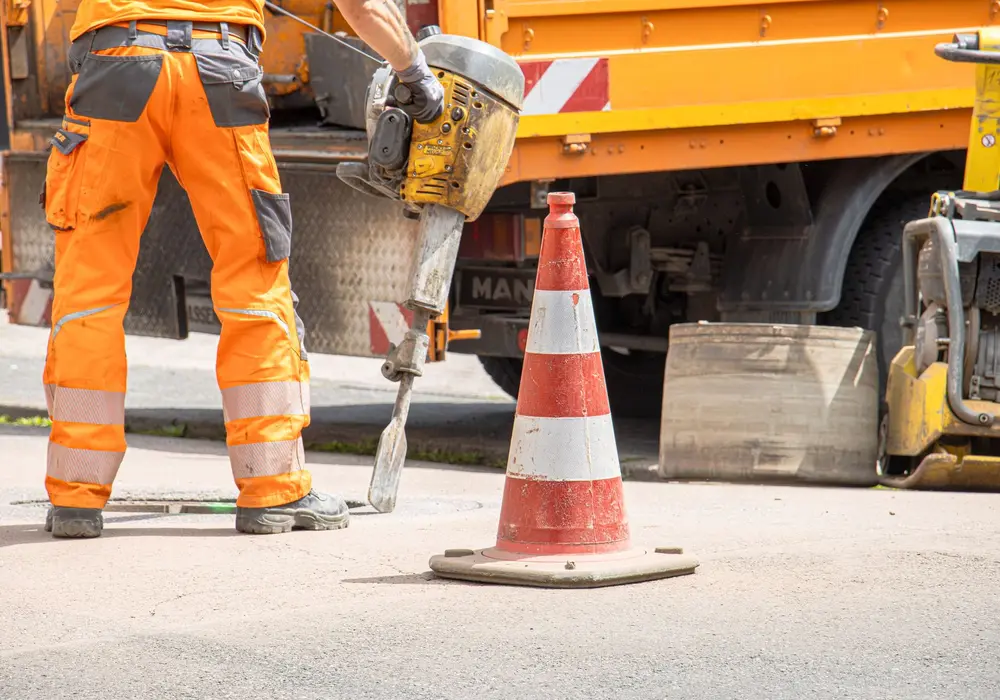
On a typical Bay Area lot, the backyard patio sits behind the house with a side yard a few feet wide as the only route in. That one fact shapes the whole job. A narrow-track loader with a breaker can pass through many standard gates, and where it fits, the patio comes out quickly. Where it doesn't, because of an AC unit, a gas meter or a fence post in the way, the crew breaks the concrete with electric hammers and moves it to the street in motorized buggies.
Either way, the route gets protected before the first trip. Plywood goes over lawn and pavers, the gate may come off its hinges, and corners of stucco or siding get padded where loaded buggies turn. Irrigation heads along the side yard are flagged so they don't get crushed. The goal is that, once the patio is gone, the side yard looks the way it did before the job started.
Protecting the House When a Patio Is Poured Against It
Many patios were poured tight against the house, sometimes right over the bottom of the siding or the weep screed at the base of the stucco. Hammering that slab without a plan can send impact into the foundation or tear the wall finish. We saw-cut a separation line a short distance off the house first, break the main field of the patio, and then remove the last strip along the wall carefully by hand.
Removing a patio that sat too high sometimes exposes damage behind it, such as rotted sill plates or siding that stayed wet for years because water ran toward the house. We point it out when we see it so your carpenter or inspector can look. When the new surface goes in, it should slope away from the foundation, and the grade we leave is set up for that.
City Sidewalk Removal and Repair Notices
In many Bay Area cities, the owner of a lot is responsible for keeping the sidewalk in front of it in repair, and a lifted panel can bring a notice from public works asking for replacement. That work happens in the public right-of-way, so it needs a permit, follows the city's standard detail for thickness and joints, and is often inspected before the pour. If a street tree caused the lift, the city may have its own rules for root pruning or tree replacement.
We remove the damaged panels between existing joints or along fresh saw cuts, keep the rest of the walk usable where we can, and set up a temporary pedestrian route with barricades when the whole width is out. Curb ramps and driveway approaches next to the work follow the same permit. We coordinate the timing with the finisher who pours the new panels so the walk is closed for as short a stretch as possible.
How Patio and Sidewalk Removal Works, Step by Step
Patio Access Route and Yard Protection
We measure the gate and side yard, pick equipment that fits, and lay plywood over lawns and paths. Gas lines to outdoor appliances are shut off and capped by a plumber before work begins.
Separate the Patio From the House
A saw cut along the foundation line isolates the slab from the house. Steps, walks or sidewalk panels that stay get their own cut lines so the breaker can't crack them.
Break and Carry Out Patio Concrete
The patio is broken in sections with a machine breaker or electric hammers, then loaded by machine or buggy into a truck at the curb. Concrete and any steel are kept apart for recycling.
Leave the Site Ready for Planting or Pavers
We remove base rock to the depth you need, then either rip the subgrade for planting or compact and grade it for new hardscape. The side yard and street are cleaned before we leave.
Removing Walkways, Steps and Hot Tub Pads
Small concrete pieces add up around older homes: a front walk, a set of poured steps with rubble packed inside, the pad under a hot tub, a basketball pole set in a deep footing, old clothesline posts in concrete. Each is a modest job alone, and combining them into one visit with the patio is usually cheaper than scheduling them one at a time. Hot tub pads need an electrician to disconnect and cap the circuit before we touch them.
- Front walks and garden paths
- Poured concrete steps and stoops
- Hot tub and equipment pads
- Footings for poles, posts and old fences
- Pool deck sections around a filled pool
What Turns Up Under an Old Concrete Patio
Patios hide things. We regularly find a second, older slab poured underneath, buried brick or construction debris used as fill, abandoned clay drain pipe, and irrigation lines nobody remembered. A gas line to a barbecue or fire pit is the item that matters most. It has to be shut off and capped by a plumber before breaking, so we ask about outdoor gas appliances during the walk-through.
If you plan to plant where the patio was, the soil under it will be compacted base rock and hardpan, not garden soil. We can dig out the base, rip the subgrade and leave the area ready for topsoil. If pavers or new concrete are going in, we leave a compacted, graded pad instead.
Patio and Sidewalk Removal Cost Factors
Thickness and steel set the baseline: a thin patio with wire mesh is quick work, while a thick slab with rebar or a slab poured over an older one takes longer. Access is often the larger factor, because every square foot carried out by buggy costs more labor than one loaded by machine. Permits and inspection for sidewalk work, removal of base rock, and the distance to the truck all add to the scope. A short site visit lets us price these items specifically.
Related Concrete Removal Services
Concrete Removal
Driveway Removal
Foundation Removal
Concrete Slab Removal
Concrete Cutting & Sawing
Asphalt & Parking Lot Removal
Retaining Wall Removal
Concrete Crushing & Recycling
Patio & Sidewalk Removal Across the San Francisco Bay Area
Do I need a permit to remove a backyard patio?
Usually not, since removing private flatwork isn't building work in most Bay Area cities. Sidewalk and curb work in front of the property is different and needs a public works permit.
Who is responsible for the sidewalk in front of my house?
In many Bay Area cities it's the adjacent property owner, though some cities share costs or handle damage from street trees themselves. Check the notice from public works, or ask us and we'll look up the local rule.
Can you remove a patio without driving machines across the lawn?
Yes. Crews can break the slab with electric hammers and carry it out in buggies over plywood. It takes more labor than machine loading, but the lawn and planting beds stay intact.
Can the ground be ready for a lawn after patio removal?
We can dig out the compacted base, loosen the subgrade and leave a graded area ready for topsoil. Your landscaper then brings in soil and plants.
Request a Patio or Sidewalk Removal Quote
Call (510) 826-3578 or use the quote form to tell us what's coming out and how wide the side gate is. Replies to form requests go out within one business day.
- Email: contact@sfbayareademolitioncontractor.com
- Serving all 9 Bay Area counties from San Jose