

Selective demolition services
Selective Demolition for Bay Area Renovations, Additions and Retrofits
Selective demolition removes one part of a building and protects everything else. We cut openings, take out stairs, mezzanines, walls and slab sections, and work to the engineer's sequence so the structure stays supported throughout.
What Selective Demolition Means on a Renovation Project
Most demolition is about taking things down quickly. Selective demolition is the opposite: the job is defined as much by what must survive as by what comes out. A new elevator shaft needs an opening through two floors of concrete. A retail tenant wants a wider storefront. A warehouse owner needs a mezzanine removed so racking can go in. A homeowner converting a garage into an ADU needs one wall gone and the slab trenched for plumbing. In each case the surrounding building has to stay sound, finished and often occupied.
That changes the tools and the pace. Instead of an excavator, the work is done with saws, core drills, hand-held breakers and compact remote-controlled machines, guided by layout lines, engineered drawings and a plan for how each piece will be supported and removed. Progress is measured in clean openings and intact surroundings, not in tons per hour.
Scanning and Layout Before Cutting Concrete or Masonry
Cutting blind into concrete is how buried conduit gets severed and, worse, how a post-tensioned tendon gets cut. Many Bay Area podium buildings, parking structures and mid-rise condos use post-tensioned slabs, where steel cables run through the concrete under very high tension. Before any saw touches a slab or a structural wall, the area is scanned with ground penetrating radar to mark tendons, rebar, conduit and embedded pipe.
Layout follows the scan. The engineer's drawings set the size and location of each opening, and the cut lines are adjusted where the scan shows something that cannot be cut. If a tendon or a critical bar sits in the way, the engineer decides whether to move the opening or reinforce around it. That conversation happens before the saw is set up, not after.
Saw Cutting, Core Drilling and Controlled Breaking Methods
The method depends on thickness, access and how clean the edge needs to be. Walk-behind flat saws cut slabs on grade and suspended decks along straight lines. Track-mounted wall saws cut vertical openings in concrete walls with clean, square edges. Wire saws handle very thick sections or odd shapes that a blade cannot reach. Core drills bore round holes for pipes and ducts, or are stitched together in a row to free a section where a saw cannot fit.
Once a section is cut free, it is either lifted out whole with rigging or broken into smaller pieces with electric breakers or a remote-controlled demolition machine. Removing large cut blocks keeps dust and noise down compared with breaking everything in place, but it requires a plan for lifting and moving heavy pieces through the building.
- Flat saws for slab and deck openings
- Wall saws for clean vertical cuts in concrete
- Wire saws for thick or irregular sections
- Core drills for penetrations and stitch drilling
- Remote-controlled breakers for heavy interior work
How Selective Demolition Works, Step by Step
Review Drawings and Scan Before Selective Demolition
We review the engineer's drawings, confirm the hazmat survey and permit are in hand, and scan concrete and masonry with ground penetrating radar. Tendons, rebar and conduit are marked on the surface before any cut line is laid out.
Install Shoring and Dust Containment Before Cutting
Temporary shoring goes in exactly as the engineer specified. Containment and negative air go up around the cut zone, and finished floors, sensitive equipment and adjacent rooms are covered or isolated from dust, slurry and vibration.
Cut, Core and Remove the Selected Elements
Openings are sawn or cored along the layout lines. Cut sections are rigged out whole or broken down with electric or remote-controlled breakers, and each piece comes out in the order the engineer set so loads stay supported.
Clean Up the Demolition Area for the Structural Trades
Slurry is vacuumed, debris is cleared, and concrete and steel are separated for recycling. The opening is left square, clean and ready for the next trade to set beams, steel frames, new footings or framing.
Shoring and Structural Coordination in Selective Demolition
Anything that carries load gets a structural engineer's attention before it is removed. The engineer specifies the temporary shoring, the order of cuts and the point at which new beams, columns or reinforcing go in. Our job is to install the shoring as drawn, remove material in the sequence specified and stop if the building does something unexpected, such as a crack opening or a beam deflecting.
In the Bay Area, seismic retrofit work is a common reason for selective demolition. Soft-story retrofits on older apartment buildings and strengthening projects on concrete and masonry buildings both require opening walls, floors and foundations in specific locations so new steel frames, shear walls or footings can be installed. The demolition is often only a few days of the project, but it sets the stage for everything that follows.
Protecting Finished Spaces During Selective Demolition
Selective demolition usually happens next to space that is finished, furnished or in use. Wet cutting controls dust but produces slurry, which has to be contained with berms and vacuumed up before it runs under a wall or into a floor drain. Dry cutting with shrouded tools and HEPA vacuums is used where water is not acceptable. Plastic containment and negative air keep fine dust inside the work zone.
Vibration and noise are planned for as well. Sensitive equipment in labs, data rooms or medical offices on the same slab can be affected by breaking, so sawing and lifting are often chosen over hammering near them. Work hours are set with the owner or property manager, and neighbors are notified before the loudest steps.
Common Selective Demolition Jobs in Bay Area Buildings
The requests vary widely, but some patterns repeat. In South Bay tilt-up buildings, new doors and dock openings are cut through concrete panels as tenants change how they use the space. In older downtown office and retail buildings, stair and elevator openings are cut through floors for new vertical circulation. In East Bay industrial flats, mezzanines, interior block walls and equipment pads are removed to make room for new operations.
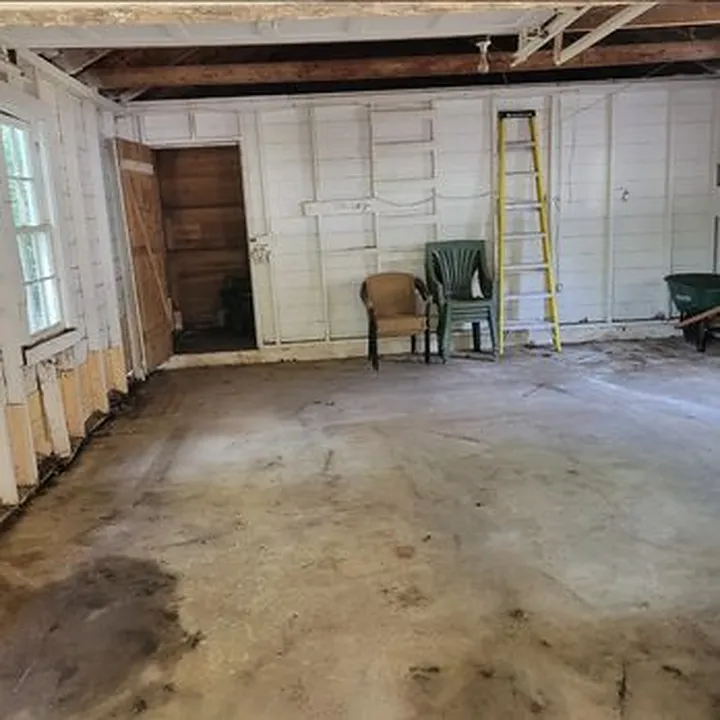
Residential selective work tends to be smaller in scale: removing a fireplace and hearth, taking out a section of slab for new plumbing, opening a garage wall for an ADU, or removing part of a rear addition before a rebuild. Our related pages on wall removal and commercial strip-out cover the lighter interior work that often surrounds these cuts.
Related Interior Demolition Services
Interior Demolition
Kitchen Demolition
Bathroom Demolition
Commercial Strip-Out
Wall Removal
Flooring & Tile Removal
Ceiling Removal
Selective Demolition Across the San Francisco Bay Area
What is the difference between selective demolition and interior demolition?
Interior demolition generally removes finishes and non-structural elements throughout a space. Selective demolition targets specific elements, often structural ones like slabs, concrete walls or stairs, while protecting what is around them.
Why do I need concrete scanning before cutting?
Scanning locates post-tension tendons, rebar, conduit and pipe inside the concrete. Cutting a tendon can be dangerous and costly to repair, and cutting a live conduit can cause injury or outages.
Does selective demolition need a permit?
Almost always, when structure is involved. The building department typically requires engineered drawings and a permit before structural elements are cut or removed.
Can you do selective demolition while the building is occupied?
Often, yes. We use containment, negative air, low-vibration cutting methods and agreed work hours to limit the impact on occupants and nearby tenants.
Request a Selective Demolition Quote
Send the address, a short description of what needs to come out and whether engineered drawings exist yet. We answer quote requests within one business day.
- Email: contact@sfbayareademolitioncontractor.com
- Serving all 9 Bay Area counties from San Jose