

Retaining Wall Removal
Retaining Wall Removal & Replacement Prep in the Bay Area
A retaining wall is holding something back, and removing it means deciding what holds that soil next. We take walls down in a planned sequence so slopes, driveways and neighboring yards stay where they belong.
What Is the Retaining Wall Holding Up?
Before discussing equipment, we look at what's behind the wall. A two-foot planter wall holding garden soil is a simple removal. A wall holding a hillside below a house, carrying a driveway along its top edge, or supporting a neighbor's yard is a different matter. The soil behind it pushes constantly, and anything sitting near the top, called a surcharge, adds to that push. When the wall comes out, something else has to take that load, even if only for a few days.
Leaning, bulging or cracked walls are often already failing, and their removal needs more care than a sound wall. Hillside lots in the Oakland and Berkeley hills, along the Peninsula foothills, in the Los Gatos and Saratoga hills and across much of Marin County frequently have walls stacked in tiers, each one supporting the slope below the next. Removing one tier can affect the others, so we look at the whole slope, not just the wall on the quote.
Concrete, Block, Timber and Stone Retaining Wall Removal Methods
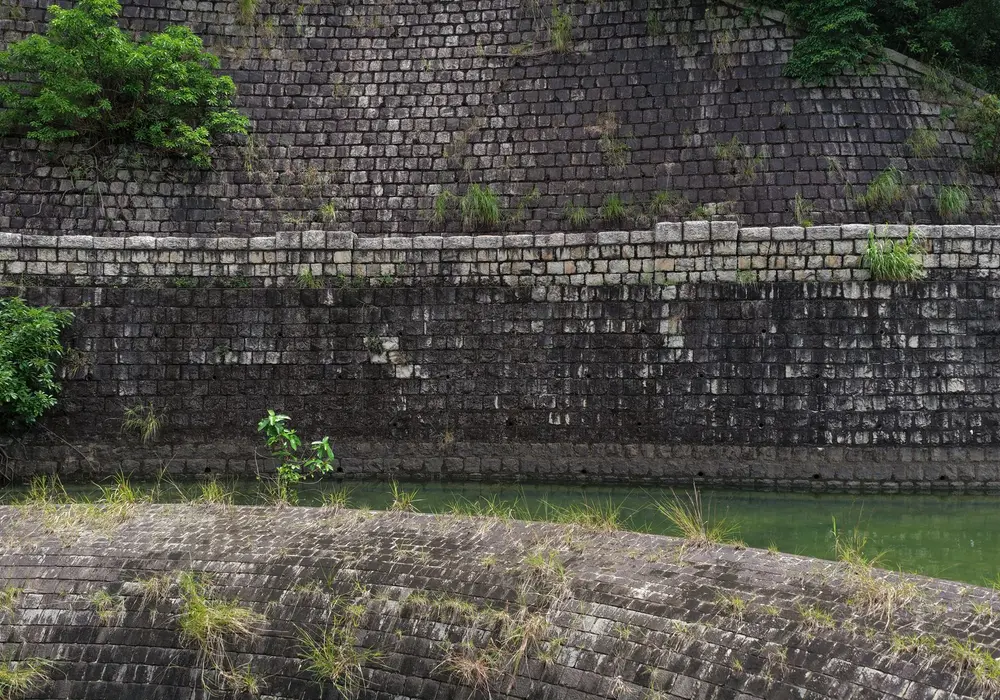
Poured concrete walls usually stand on a reinforced footing that extends back under the retained soil. They come down with a breaker working from the top, and the footing is excavated and broken last. Concrete block walls with grouted cells and rebar break in a similar way. Dry-stacked segmental block walls can often be taken apart course by course, though many have geogrid reinforcing layers extending back into the soil that must be dug out too.
Timber walls built from railroad ties or pressure-treated posts and lagging are common on older properties. In California, treated wood removed from these walls is regulated as treated wood waste and goes only to facilities that accept it, never into wood recycling or green waste. Stone walls, gabions and old brick walls are removed by hand or machine depending on their size, and clean stone can sometimes be stockpiled for reuse in landscaping.
- Poured concrete cantilever walls and footings
- Grouted concrete block walls
- Segmental block walls with geogrid
- Railroad tie and treated timber walls
- Dry-stacked stone, brick and gabion walls
Keeping the Slope Stable During Wall Removal
The basic rule is to take the wall down from the top in short sections and never leave a tall, unsupported cut face of soil. Where there's room, the soil behind the wall is laid back to a stable slope as the wall comes down. Where there isn't, because a house, driveway or property line is close, the engineer may call for temporary shoring or for the old wall to be removed in alternating sections as the new wall goes in alongside it.
Rain changes everything on a slope. Exposed soil is covered with plastic sheeting during wet weather, runoff is directed away from the cut, and we avoid opening steep cuts in the middle of the rainy season when the schedule allows. Expansive clay common across the Bay Area can lose strength quickly when it gets wet, and a cut that stood in September may slump in January.
How Retaining Wall Removal Works, Step by Step
Assess the Retaining Wall and Retained Soil
We look at the wall's material, height and condition, what sits above it and how close structures and property lines are. Engineering, survey or neighbor agreements are sorted out before work starts.
Remove the Retaining Wall From the Top Down
The wall comes down in short sections from the top, with soil behind it laid back or supported as each section goes. Treated timber, concrete and stone are kept apart for proper disposal.
Break Out the Wall Footing
The footing and any buried reinforcing are excavated and removed, along with old drain rock and damaged drain pipe. The bottom of the excavation is cleaned for the new wall's footing.
Stabilize the Slope for the New Wall
Exposed soil is graded to a safe slope or held by temporary shoring, covered against rain and left ready for the wall contractor. Erosion control stays in place until the new wall is built.
Retaining Walls on the Property Line
Many retaining walls sit on or near a property line, and some were built jointly by two owners decades ago. Before removing one, it helps to know where the line actually runs, which may mean a survey, and who owns the wall. Removing a wall that holds up a neighbor's yard needs their agreement and a plan for supporting their soil. Equipment access may also depend on crossing the neighbor's property. HOAs in hillside developments often have their own rules for wall work. We'd rather sort all of this out before the job than in the middle of it.
Permits and Engineering for Retaining Wall Removal
Removing a small garden wall usually doesn't need a permit. Replacing a wall often does. Many Bay Area building departments require a permit and engineered design for walls above a certain height, walls with a surcharge such as a driveway or house above them, and walls on mapped landslide or hillside areas. A geotechnical report may be needed for the new wall's design. Because the replacement drives the permit, the removal is usually scheduled as the first phase of the permitted wall project.
When we remove the old wall, we also see why it failed. Most often the cause is drainage: no gravel backfill, weep holes clogged with soil, or a drain pipe crushed or never installed. Water building up behind a wall pushes far harder than dry soil. We point out what we find so the new wall's designer and builder can address it, since a new wall with the same drainage problem won't last much longer than the old one.
Related Concrete Removal Services
Concrete Removal
Driveway Removal
Patio & Sidewalk Removal
Foundation Removal
Concrete Slab Removal
Concrete Cutting & Sawing
Asphalt & Parking Lot Removal
Concrete Crushing & Recycling
Retaining Wall Removal Across the San Francisco Bay Area
Is it safe to remove a leaning retaining wall?
It can be, with a plan. A leaning wall is already under strain, so it's taken down in short sections from the top, with the soil behind it laid back or supported. For tall walls or walls near structures, an engineer should weigh in first.
Do I need a permit to remove a retaining wall?
Removing a small wall often doesn't. Building the replacement frequently does, especially for taller walls or walls with a driveway or house above them. We check with the local building department as part of planning.
How are railroad tie walls disposed of?
Railroad ties and pressure-treated lumber count as treated wood waste in California. They have to go to facilities permitted to take it, separate from clean wood and green waste.
What if the wall is shared with my neighbor?
Both owners should agree before removal, and a survey may be needed to confirm the line. The neighbor's soil has to be supported during the work, so we plan the sequence with both of you in the loop.
Get a Retaining Wall Removal Quote
Call (510) 826-3578 or tell us on the quote form about the wall's height, material and what sits above it. Someone replies to each form request within one business day.
- Email: contact@sfbayareademolitioncontractor.com
- Serving all 9 Bay Area counties from San Jose