

Flooring and tile removal
Flooring and Tile Removal for Bay Area Homes and Commercial Floors
New flooring is only as flat as what sits underneath it. We take up carpet, vinyl, hardwood and tile, remove the adhesive and mortar left behind, and hand your installer a clean subfloor or slab.
Flooring Removal by Material: Carpet, Vinyl, Wood and Tile
Each flooring type comes up a different way. Carpet and pad roll up quickly, but the tack strip around the room and thousands of staples in the subfloor still have to be pulled. Sheet vinyl and vinyl tile peel up, but the felt backing or adhesive often stays on the floor. Nail-down hardwood is pried up board by board, and glue-down engineered wood is cut into strips and scraped. Floating laminate and click flooring is the easiest of all.
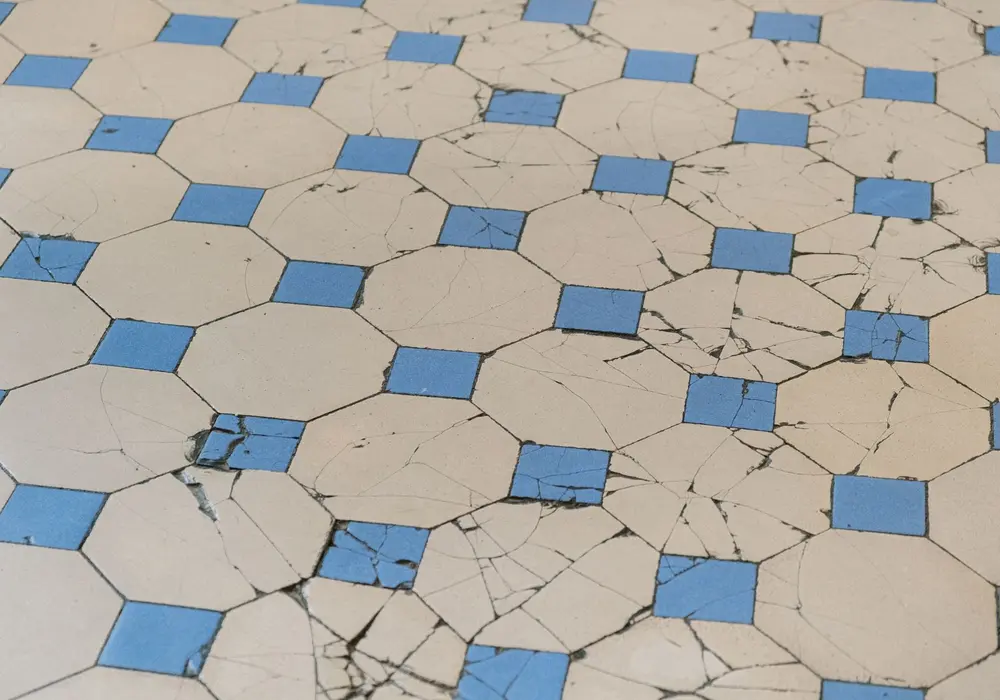
Ceramic and porcelain tile takes the most effort. Tile set in thinset over cement board or plywood can be removed along with its backer board. Tile set in a thick mortar bed, which is common in homes built before the 1980s, has to be broken out with demolition hammers and carried out as heavy rubble. Stone tile is heavier still.
- Carpet, pad, tack strip and staples
- Sheet vinyl, VCT and luxury vinyl plank
- Nail-down and glue-down hardwood
- Thinset and mortar-bed ceramic or stone tile
- Underlayment, backer board and old subfloor layers
Getting Down to a Clean Subfloor or Slab
Removing the visible flooring is only half the job. Flooring manufacturers publish flatness and preparation requirements for their products, and leftover thinset ridges, adhesive or staples can telegraph through new vinyl or crack new tile. On concrete, we remove thinset and adhesive with floor scrapers and grinders fitted with dust shrouds connected to HEPA vacuums. On wood subfloors, we pull fasteners, scrape residue and replace damaged sections if your contractor asks.
The target condition depends on what is going down next. A floating floor tolerates more than a glue-down plank, and large-format tile needs a very flat surface. Your flooring installer's requirements set the standard, and we would rather ask than guess. If the slab has dips or high spots, we flag them so the installer can plan for self-leveling compound.
Old Vinyl, Black Mastic and Asbestos in Floor Removal
Some of the most common asbestos-containing materials in Bay Area homes and offices are on the floor. Nine-inch square vinyl tiles, many older sheet vinyl products with a paper or felt backing, and the black cutback adhesive used under them can all contain asbestos. They are often buried under one or two newer layers, so a house that looks like it has a modern floor may have an older one underneath.
Those materials are tested before removal. If results are positive, a certified abatement contractor removes them under the air district's rules, usually with wet methods and without grinding, and we start once that work is complete. Never sand, grind or bead blast suspect floor materials without test results in hand, because those methods make asbestos airborne.
How Flooring and Tile Removal Works, Step by Step
Test the Floor Layers Before Removal
We identify every layer, including what hides under the visible floor. Suspect vinyl, backing and adhesive are tested, and any positive material is removed by a certified abatement contractor before our crew sets foot on it.
Protect the Room and Set Up Dust Control
Baseboards and door casings are removed or protected, the room is sealed with plastic, HVAC returns are covered, and dust shrouds and HEPA vacuums are connected to every grinder and saw before they start.
Remove Flooring, Tile and Underlayment
Carpet, vinyl, wood or tile comes up by the method suited to it, followed by underlayment and backer board. The crew works toward the exit so debris is never tracked back across floor that is already cleared.
Grind, Scrape and Hand Over a Clean Floor
Thinset ridges, adhesive and fasteners are ground or scraped off until the subfloor or slab meets the installer's preparation requirement. The room is HEPA vacuumed, and debris is sorted by material and hauled away.
Tile Removal From Slabs With Radiant Heat or Post-Tension Cables
Not every slab can take a heavy hammer. Eichler homes and some other mid-century houses in the South Bay and Peninsula have radiant heat tubing cast into the slab, sometimes only a short distance below the surface. Aggressive chipping can puncture a tube and create an expensive repair. On those slabs, we use light electric chipping hammers at low angles and floor scrapers, and we can map the tubing with a thermal camera when the system is running.
Condos and podium buildings often have post-tensioned concrete decks, where steel cables run through the slab under high tension. Tile removal on those decks stays at the surface, without cutting or drilling into the concrete. Cracks discovered under old tile are pointed out to the owner, since they may need attention before new tile goes down.
Commercial Floor Removal: Carpet Tile, VCT and Epoxy
Large commercial floors call for different equipment. Ride-on floor scrapers peel carpet tile, sheet goods and VCT in long strips, covering a lot of floor per shift with a small crew. Carpet tile can often go to manufacturer take-back programs if it is kept dry and separate. Old epoxy and urethane coatings in labs, kitchens and warehouses are removed with walk-behind grinders or shot blasters that leave a profile the new coating can grip.
Office buildings usually require this work after hours, and the dust and noise of a grinder are managed with containment, vacuums and the building's schedule. Floor removal in retail and restaurant spaces often happens as part of a full commercial strip-out, while warehouse coatings are typically removed when a new tenant needs fresh striping and a different finish.
Noise and Dust Control During Floor and Tile Removal
Tile removal is one of the loudest interior demolition tasks. On a concrete slab, the sound of a demolition hammer carries through the structure into neighboring units, which is why condo associations often restrict it to certain hours. We plan the hammer work into those windows and use scrapers and grinders, which are quieter, for the rest of the job.
Dust is controlled at the source. Grinders and saws run with shrouds and HEPA vacuums, debris is bagged or carted out instead of swept into the air, and the work area is sealed with plastic. HVAC returns in the room are covered so dust does not travel through the ductwork.
Related Interior Demolition Services
Interior Demolition
Kitchen Demolition
Bathroom Demolition
Commercial Strip-Out
Selective Demolition
Wall Removal
Ceiling Removal
Flooring & Tile Removal Across the San Francisco Bay Area
Can new flooring go over old tile instead of removing it?
Sometimes, depending on the product, floor height and the condition of the existing tile. But many installers prefer a clean substrate, and floor height at doors and appliances often makes removal the better option.
How do I know if my old vinyl floor contains asbestos?
Only lab testing can tell you. A certified asbestos consultant takes samples of the tile, backing and adhesive, and the results determine whether abatement is needed before removal.
Can you remove tile from a slab with radiant heat?
Yes, with care. We use light chipping tools at shallow angles and scrapers instead of heavy breakers, and can map tubing with a thermal camera when the heat is on.
How loud is tile removal?
Breaking tile with a hammer is very loud, especially on concrete. We schedule that work within allowed hours and use quieter grinding and scraping for the rest of the job.
Request a Flooring and Tile Removal Quote
Tell us the square footage, the flooring that is down now and what goes in next. You will hear back within one business day of sending the form.
- Email: contact@sfbayareademolitioncontractor.com
- Serving all 9 Bay Area counties from San Jose