

Concrete Cutting & Sawing
Concrete Cutting, Sawing & Core Drilling in the Bay Area
Some concrete has to come out in a precise shape, not just come out. Diamond saws and core drills let us open a wall, trench a floor or square off a slab edge without damaging the concrete around it.
Flat Sawing, Wall Sawing, Wire Sawing and Core Drilling
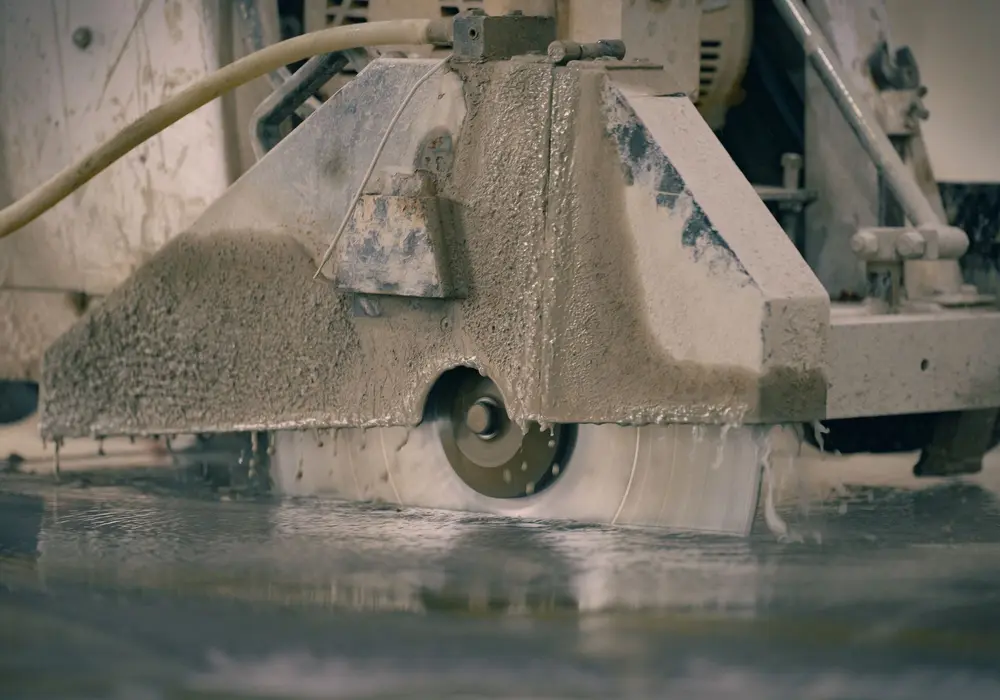
Each saw has a job it does best. A flat saw, also called a slab saw, is a walk-behind machine with a diamond blade that cuts horizontal surfaces: driveways, floors, sidewalks and parking areas. A wall saw mounts on a track bolted to a vertical or overhead surface and cuts straight, deep lines through walls, decks and tilt-up panels. A wire saw wraps a diamond-studded cable around a section of any shape, which suits very thick walls, large footings and spots where no blade can reach.
Core drills bore round holes, from small penetrations for conduit up to openings large enough for ducts and drain lines. Hand-held ring saws and concrete chain saws finish corners that a circular blade would overcut, so a doorway gets square corners without slots running past them. The right tool depends on thickness, orientation, access and how clean the finished edge needs to be.
- Flat saws for slabs, driveways and paving
- Track-mounted wall saws for walls and decks
- Diamond wire saws for thick or odd-shaped sections
- Core drills for pipe, conduit and duct holes
- Ring saws and chain saws for square corners
Cutting New Openings in Concrete Walls
New doorways in basement walls, larger windows in a concrete foundation, loading doors in a tilt-up panel and pass-throughs in a parking structure all start the same way: with an engineer. Cutting an opening changes how a wall carries load, so a structural engineer designs the opening, any new header or framing, and the shoring needed while the cut is made. The building department usually wants to see that design before issuing a permit, and we work from the stamped drawings.
On site, we drill the corners first so the saw never cuts past the opening, then wall-saw or wire-saw the sides. The cut block is either removed whole with a forklift, crane or rigging or sawn into smaller pieces that can be carried out. Soft-story retrofit work in older apartment buildings often calls for openings or slots in concrete walls and footings to tie in new steel frames, and the same engineered approach applies.
Saw Cutting Floor Trenches for Plumbing and Electrical
Garage conversions, ADUs with new bathrooms, restaurant build-outs and office kitchens all need new drain lines under an existing slab. The usual method is two parallel saw cuts, breaking out the strip between them, and digging the trench below for the plumber. Depth control matters. A blade set too deep in an Eichler slab can cut the radiant tubing, and in commercial floors the same mistake can hit conduit feeding the next suite.
Once the plumber or electrician has their lines in and inspected, the trench is backfilled and the concrete is patched, usually by the general contractor. Clean, straight saw edges make that patch stronger and easier to finish flush with the floor around it, which is the main reason trenches are sawn rather than simply hammered.
How Concrete Cutting Works, Step by Step
Scan and Mark the Concrete Cut Lines
We scan the concrete for steel, tendons, conduit and pipes, then lay out the cut lines from the drawings or your marks. Anything found in the cut path is flagged before the saw is set up.
Set Up Slurry Control Before Sawing
Drain inlets are covered, containment goes up for indoor work, and water and power are routed to the saw. Wall saw tracks or core drill stands are anchored where the cut begins.
Make the Concrete Cuts
The crew cuts to the marked depth with the right saw, drilling corners first on openings. Slurry is vacuumed continuously so it never runs across the floor or into the street.
Remove the Cut Sections and Clean Up
Cut pieces are lifted out whole or broken smaller and hauled for recycling. We clean residue from the work area so the plumber, framer or finisher can start right away.
Scanning, Slurry and Silica Control During Concrete Sawing
Every cut starts with a scan. Ground-penetrating radar shows rebar, post-tension tendons, conduit and pipes inside the concrete, and we mark them on the surface before the blade is set. Wet sawing then keeps silica dust out of the air, as Cal/OSHA's silica rules expect, but it produces a gray slurry of water and concrete fines. That slurry is alkaline and cannot reach a gutter or storm drain under Bay Area stormwater rules.
We vacuum slurry as we cut, block nearby drain inlets and collect wash water for proper disposal. Indoors, cutting runs with water feed and wet vacuums, or with dry vacuum shrouds where water would damage finishes. Hearing protection is standard for the crew, and saws are loud enough that we coordinate with neighbors or tenants on when the longest cuts happen.
Saw Cutting Before Concrete Removal
Much of our sawing supports removal rather than standing alone. Before a driveway panel, a section of sidewalk or part of a warehouse floor is broken out, a saw cut defines exactly where the removal stops. Without it, a breaker sends cracks into the concrete you meant to keep, and the patch has a ragged, weak edge. With it, the finisher pours against a straight, sound face, and the joint between old and new holds up.
What Affects Concrete Cutting Cost
Sawing is priced by the work, not the hour alone. Depth of cut and total length drive blade wear and time, and dense rebar slows any saw. Wall saws need setup time to anchor the track, and overhead coring takes longer than drilling a floor. Access to water and power, the need for indoor containment, slurry handling, removing the cut pieces and after-hours work in occupied buildings all affect the number. Engineering and permits for structural openings are separate from the cutting itself.
Related Concrete Removal Services
Concrete Removal
Driveway Removal
Patio & Sidewalk Removal
Foundation Removal
Concrete Slab Removal
Asphalt & Parking Lot Removal
Retaining Wall Removal
Concrete Crushing & Recycling
Concrete Cutting & Sawing Across the San Francisco Bay Area
How deep can a concrete saw cut?
It depends on the saw and blade size. Flat saws handle most driveways, residential slabs and many commercial floors in one pass. Thicker walls and footings are cut with wall saws or wire saws, which can go through much heavier sections.
Do I need an engineer to cut a doorway in a concrete wall?
Almost always. A new opening changes how the wall carries load, so a structural engineer designs it and the building department typically issues a permit. We cut to the engineer's drawings.
Can concrete be cut without making a mess?
Wet cutting keeps dust down, and we vacuum the slurry as the saw runs. Indoors we add plastic containment and wet vacuums. The work is never spotless, but debris stays in the work area and out of drains.
Will the saw hit pipes or wiring inside the concrete?
We scan before cutting to find rebar, tendons, conduit and pipes, then mark them so the cut avoids them. Scanning lowers the risk a great deal, and on sensitive jobs we confirm questionable spots with small test cores.
Get a Concrete Cutting Quote
Call (510) 826-3578 or send the quote form describing the cut: wall or floor, thickness if you know it, and the size of the opening or trench. We get back to form requests within one business day.
- Email: contact@sfbayareademolitioncontractor.com
- Serving all 9 Bay Area counties from San Jose