

Construction lot preparation
Lot Clearing for New Construction on Bay Area Infill and Teardown Sites
A builder cannot stake a foundation on top of the last one. We clear teardown and infill lots down to native soil, pull the leftovers nobody shows on a plan, and hand over a rough graded pad that is ready for layout, soils testing and trenching.
What Builders Need From a Cleared Construction Lot
Ask a framer, a foundation sub and a soils engineer what a ready lot looks like and you will hear the same list. No organic material or loose fill inside the building footprint. No old concrete, pipe or root balls where new footings go. A surface close to the elevations on the grading plan. Clear access for a concrete pump and a lumber drop. Erosion control already working, so the first inspection is not a correction notice.
Our job is to deliver that list. We work from the approved site plan, not from a guess about what the next house will look like, and we leave survey monuments and benchmarks alone. When the lot is done, the surveyor can set stakes without moving debris, the soils engineer can see native ground, and the builder can schedule trades without a cleanup day in between.
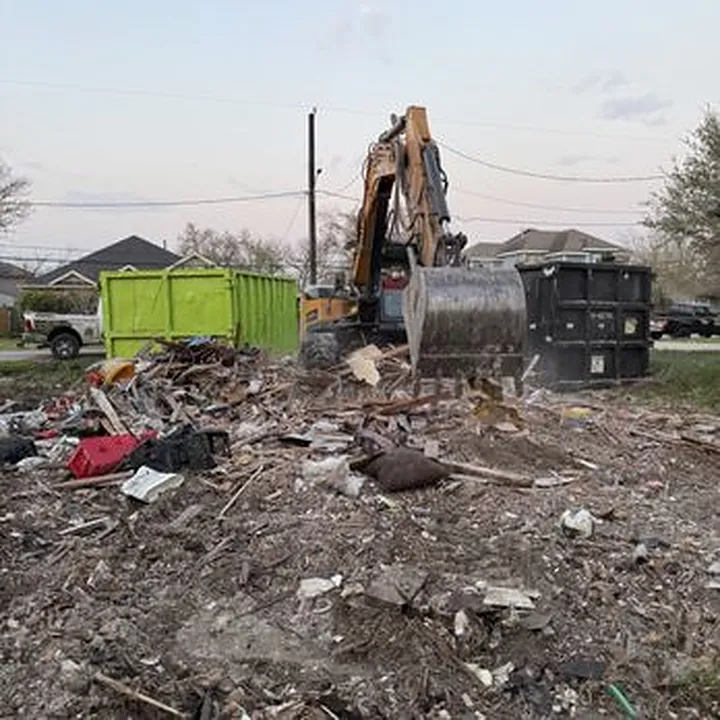
Removing What the Previous House Left Behind
On a teardown lot the house itself is only part of the problem. Older Bay Area homes sit on perimeter footings, pier blocks, and in some cases a partial basement that was later filled with whatever was handy. Post-war tract homes often have slabs with radiant tubing or a thickened edge. Every piece of that comes out within the new footprint, and usually across the whole buildable area so a future patio does not crack over a buried footing.
The utilities leave traces too. The sewer lateral gets capped at the point the city or sanitary district requires, often with an inspection before backfill. Gas and electric service are disconnected by PG&E, or by the municipal utility in cities like Santa Clara, Palo Alto and Alameda, well before excavation starts. Old water lines, abandoned irrigation, dry wells, downspout drains and buried oil tank vents get traced and removed or reported.
- Perimeter footings, piers and slab sections
- Filled basements and rubble pockets
- Capped sewer lateral at the approved point
- Abandoned water, irrigation and drain lines
- Driveways, walkways and retaining walls
Clearing a Backyard Lot for an ADU or Second Unit
Backyard ADU projects are some of the tightest clearing jobs in the region. The main house stays occupied, the only access might be a side yard three feet wide, and the work area is surrounded by neighbor fences on three sides. A mini excavator that fits through a standard gate, power buggies and hand crews do the work that a full-size machine would do on an open lot.
Typical items in an ADU yard include an old garage or shed, a concrete patio, a lawn with sprinkler lines, fruit trees, raised planters and decades of buried landscape edging. Some trees may be protected under the city's ordinance even in a backyard, so we confirm that before cutting. Where a fence panel has to come out for access, we agree on that with the owner and neighbor in advance. Debris travels through the side yard on protected paths so the existing house and hardscape are not damaged.
How Lot Clearing for New Construction Works, Step by Step
Review Plans and Mark the House Footprint
We read the site plan, grading plan and geotechnical report, then walk the lot with the builder. The new footprint, protected trees and anything staying are flagged so the crew knows the limits before the first cut.
Install Erosion Control at the Site Entrance
Rock goes down at the driveway, fiber rolls and inlet protection go in, and tree protection fencing is installed where required. Utility disconnects and the sewer cap are confirmed before excavation begins on the lot.
Dig Out Old Footings, Slabs and Buried Lines
Old foundations, hardscape, laterals and filled pockets are excavated and sorted into concrete, metal, wood and soil. The soils engineer can observe native ground before anything new is placed on the construction lot.
Rough Grade and Hand Off the Construction Lot
The pad is shaped close to plan elevations and track-walked or compacted as agreed. We walk the site with the builder, share disposal records and confirm the lot is ready for the surveyor to stake.
Construction Entrances, Erosion Control and Street Protection
City inspectors notice the street before they notice the lot. Mud tracked from a cleared site onto the public road, sediment in a gutter, or an unprotected storm drain inlet can bring a stop work notice on a project that is otherwise in good shape. A stabilized construction entrance of coarse rock at the driveway keeps truck tires from carrying soil out, and the street gets swept as needed.
Around the lot, silt fence or fiber rolls sit along the downhill edges, inlet protection goes on nearby drains, and stockpiles of soil are covered when rain is forecast. Most Bay Area cities spell out these measures in their storm water requirements or in the conditions on the building permit. We set them up during clearing so the builder inherits a site that already meets them.
Coordinating Lot Clearing With Surveyors, Soils Engineers and Utilities
A cleared lot is a shared workspace, and timing between consultants keeps projects moving. The soils engineer may want to see the site after old fill is removed, before any new soil is placed, so we call them in at that point rather than burying the evidence. The land surveyor needs a clean pad to set building corners and elevations. Utility trenching for new services often follows right behind.
Expansive clay is common across the valley floors of Santa Clara and Alameda counties, and the geotechnical report may call for removing and recompacting a layer of soil under the slab. When that is part of the scope, the clearing and the overexcavation can happen in one mobilization. If a separate grading contractor is handling earthwork, we leave the lot at an agreed grade and document what was removed.
What Changes the Price of Lot Clearing for New Construction
The visible items are easy to count: a driveway, a patio, a few trees, a fence. The buried ones are what move the price. A basement filled with rubble, a thick slab with steel, or an unexpected second foundation from an earlier house can double the digging and hauling. Access through a narrow side yard or up a steep driveway slows every load. Disposal costs vary with material type, so a lot heavy with concrete prices differently than one heavy with soil.
Permit conditions shape cost as well. Erosion control, tree protection fencing, sewer cap inspections and any required haul route all take time and material. We break these out in the quote so the owner or builder can see what is fixed and what depends on conditions found during excavation.
Related Site Clearing Services
Site Clearing
Land Clearing
Excavation & Grading
Tree & Stump Removal
Debris Hauling
Construction Cleanup
Brush & Defensible Space Clearing
Lot Clearing for New Construction Across the San Francisco Bay Area
Do I need separate contractors for demolition and lot clearing?
No. We can demolish the existing house, remove the foundation and clear the lot in one sequence, which avoids a second mobilization and finger-pointing over what was left in the ground. If another firm handled the house, we can pick up from where they stopped.
How deep do you remove old foundations?
Inside the new building area we remove old footings, slabs and piers completely, then follow the geotechnical report on any additional overexcavation. Outside the footprint, the plan and the owner decide, but we usually recommend full removal under future hardscape too.
Can you clear a backyard for an ADU without damaging my house?
That is the normal setup for ADU work. We use small equipment through the side yard, lay protection over paths and patios that stay, and plan the haul so trucks load at the street. Any fence removal for access is agreed in advance.
Who arranges the gas and electric disconnect before clearing?
The property owner or builder requests it from the utility, which is PG&E for most of the region and a municipal utility in a few cities. We help with timing and confirm the disconnect is complete before our crew digs near the old service.
Request a Quote for Construction Lot Clearing
Send the address, your site plan status and when your builder needs the pad. We reply to quote requests within one business day, or you can reach us at (510) 826-3578.
- Email: contact@sfbayareademolitioncontractor.com
- Serving all 9 Bay Area counties from San Jose