

Asbestos Removal Coordination
Asbestos Abatement Before Demolition in the Bay Area
Asbestos has to leave a building before the building leaves the lot. We schedule the survey, the air district notice and a certified asbestos abatement contractor, then start demolition as soon as the consultant clears the work area.
Where Asbestos Turns Up in Bay Area Homes and Commercial Buildings
Asbestos was cheap, fire resistant and everywhere in postwar construction, and Bay Area building stock reflects that. In 1950s and 1960s ranch tracts it shows up in acoustic popcorn ceilings, 9-inch vinyl floor tiles and the black mastic under them, drywall joint compound and wall texture, and the paper wrap on heating ducts. Older Victorians and Craftsman homes add boiler and pipe insulation in the basement and cement flue pipe. Not every sample tests positive, which is why the lab, not the age of the house, decides.
Commercial buildings carry larger quantities in different places. R&D tilt-ups built during the 1970s and 1980s often have floor tile, roofing mastic and sprayed fireproofing to check. Office buildings may have spray-applied fireproofing on steel or asbestos in ceiling tiles. Warehouses and industrial plants used cement asbestos panels, gaskets and pipe lagging. Stucco, plaster and window glazing putty get sampled too, because each has caught owners off guard on remodels around the region.
- Popcorn and acoustic ceiling texture
- Vinyl floor tile, sheet flooring backing and mastic
- Drywall joint compound and wall texture
- Pipe, boiler and duct insulation
- Cement asbestos siding, panels and flue pipe
- Roofing felts, mastics and flashing cement
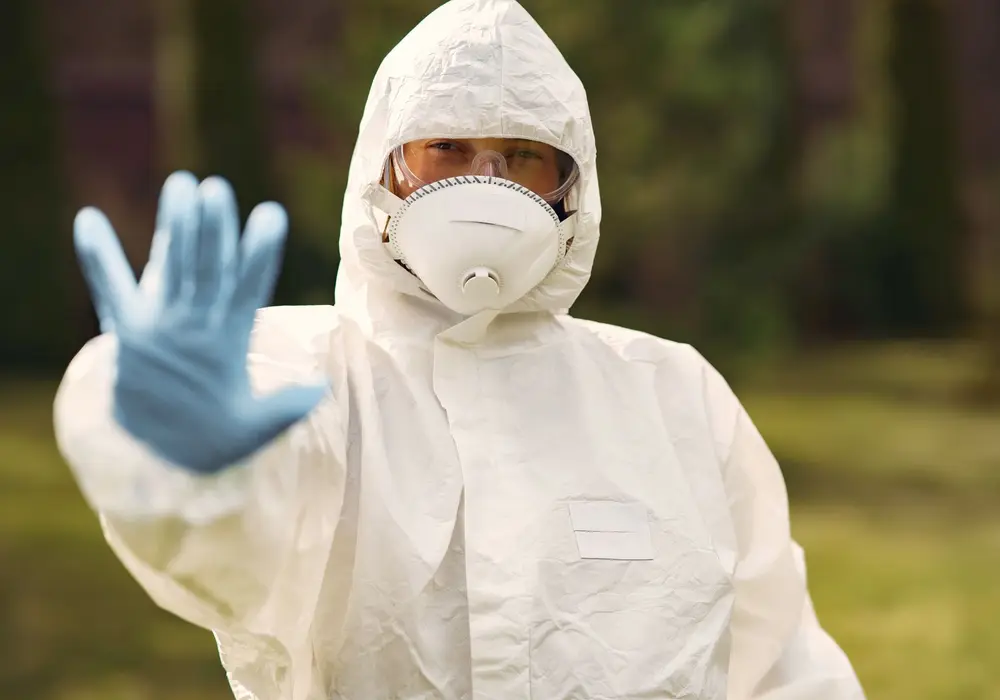
Friable or Non-Friable: Why the Asbestos Category Changes the Removal Plan
Friable material can be crumbled by hand pressure, and it releases fibers easily. Sprayed ceiling texture, pipe lagging and old fireproofing fall in this group. They need full containment with negative air, wet removal and careful bagging. Non-friable materials, such as intact floor tile or cement board siding, lock fibers in a binder, so some can be removed with simpler controls. The asbestos consultant classifies each material in the survey, and the abatement contractor writes the work plan from that classification.
Demolition changes the picture. A floor tile that is harmless to walk on will not stay intact under an excavator bucket, so materials that could sit undisturbed for decades generally come out before a building is knocked down. Whether a specific non-friable item can stay during demolition is a question for the consultant and the air district rules, not a judgment our crew makes in the field. When there is doubt, it comes out first.
Asbestos Survey, Notification and Removal Under BAAQMD Regulation 11 Rule 2
The air district's asbestos rule calls for a certified asbestos consultant to inspect and sample the building before any demolition or renovation that could disturb suspect materials. For a full demolition, the district must also be notified in advance whether or not asbestos was found. Regulated asbestos-containing material has to be removed by a qualified contractor before the structure comes down. A few areas at the northern and eastern edges of the nine counties answer to a different air district, so we confirm the agency for each address.
At the state level, Cal/OSHA certifies asbestos consultants and site surveillance technicians, and contractors doing asbestos work register with it and follow its construction asbestos standard. The Contractors State License Board also issues an asbestos certification to contractors. Those credentials belong to the abatement firm we schedule, not to us. Our part is to hand that firm a clear scope, a realistic start date, safe access and a demolition plan that waits for the consultant's clearance.
How Asbestos Abatement Works Before a Demolition, Step by Step
Asbestos Survey and Lab Analysis
A certified asbestos consultant walks the building, samples suspect materials room by room, and sends them to an accredited lab. The report lists each material with its location, quantity and condition, and it shapes both the abatement bid and our demolition plan.
Air District Notice and Abatement Scheduling
With results in hand, the demolition notification goes to the air district and the abatement contractor is booked. We line up their start date with the permit timeline, arrange temporary power and water, and keep live utilities safe for their crew.
Asbestos Containment, Removal and Clearance Testing
The abatement crew builds containment, removes the material wet, bags and labels it, and cleans the area. Clearance air samples must pass before the plastic comes down, and the waste leaves on a shipment record to a permitted disposal site.
Demolition Begins After Asbestos Clearance
Once the consultant releases the building, our crew completes utility disconnects and brings the structure down with water on the work face. Debris is sorted for recycling, and any suspect material found along the way is stopped, sampled and handled.
Inside an Asbestos Containment: What the Abatement Crew Does
Abatement crews seal the work area with polyethylene sheeting on floors and walls, close off vents and doorways, and set up a decontamination unit at the entrance. HEPA-filtered air machines hold the containment under negative pressure so air flows in rather than out. Material is misted with amended water, removed with hand tools, and packed into labeled, sealed bags or wrapped for disposal. The consultant or the contractor samples the air during the work and again at the end.
When removal is finished, the area is cleaned with HEPA vacuums and wet wipes, inspected visually, then tested. Clearance air samples have to meet the standard before the plastic comes down. The waste leaves on a shipment record that tracks it to a disposal site permitted to accept asbestos. Owners should keep the survey, the notification, the shipment records and the clearance report, because lenders, buyers and building departments sometimes ask for them years later.
How Asbestos Abatement Affects Demolition Schedule and Cost
On a single-family teardown, asbestos abatement usually adds days rather than weeks, provided the survey happened early. The real delays come from late surveys, slow sample results and notifications filed after the permit is otherwise ready. We try to have the consultant on site during the first week of planning, often before our demolition number is final, so the abatement window is part of the schedule from the start instead of a discovery halfway through.
Cost follows quantity, friability and access. A house with tile only in the kitchen is a very different job from one with popcorn ceilings in every room and wrapped ducts in the crawl space. Attached buildings, occupied units next door, stacked layers of flooring and tight access on hillside lots all add containment time. Disposal of asbestos waste also costs more than ordinary debris. We list abatement as its own line so owners can compare it directly against other bids.
Hidden Asbestos Found During Demolition: What Happens Next
Even a careful survey cannot see everything. Flooring buried under two newer layers, insulation sealed inside a wall cavity, and roofing patched over many times can hide suspect material until demolition opens it up. When our crew uncovers something that looks suspect, work in that area stops, the material is kept damp and the area isolated, and the consultant comes back to sample. If it tests positive, the abatement contractor removes it and the notification is updated as the rules require. Then demolition picks up where it left off.
Related Hazardous Material Abatement Services
Hazardous Material Abatement
Lead Paint Abatement
Mold Remediation
Underground Storage Tank Removal
Septic Tank Removal
Pre-Demolition Hazmat Survey
Asbestos Abatement Across the San Francisco Bay Area
Can a house with asbestos be demolished without abatement in the Bay Area?
Not if the asbestos is regulated material that demolition would disturb. It has to be removed by a qualified abatement contractor before the building comes down, and the air district must be notified. The consultant's survey decides which materials fall into that group.
How do I know if my popcorn ceiling contains asbestos?
Only a lab test can tell you. Many ceilings installed before the 1980s test positive, but plenty do not. A certified consultant takes the sample with the surface wetted and the spot cleaned up afterward, which is safer than scraping a piece off yourself.
Does your company remove asbestos?
No. We do not hold asbestos abatement certifications. We hire or coordinate a state-certified abatement contractor, build their work into the demolition schedule, and start our demolition once the area has passed clearance.
Does a newer building still need an asbestos survey before demolition?
Generally, yes. The air district's survey requirement is not tied to the year a building was constructed, and some asbestos products stayed in use after the 1970s. Newer buildings usually produce short survey reports, but the survey itself is still part of the demolition paperwork.
Can neighbors stay home during asbestos abatement next door?
In most cases, yes. Containment and negative air keep fibers inside the work area, and air is monitored during the job. We let adjacent households know the dates in advance and keep windows and vents on the shared side in mind when containment is set up.
Schedule Asbestos Abatement and Demolition Together
Request a quote with the property address and the year the building went up, and tell us if a survey already exists. Our office responds to form requests within one business day.
- Email: contact@sfbayareademolitioncontractor.com
- Serving all 9 Bay Area counties from San Jose