

Gas Station Demolition
Gas Station Demolition and Fuel Site Clearing in the Bay Area
Closing a fuel station means more than knocking down a kiosk. The canopy, dispensers, product piping, vent risers and underground tanks all come out under agency oversight, and the order of that work decides how smoothly the site closes.
What Gas Station Demolition Includes Above Ground
A typical Bay Area station sits on a corner lot with a steel canopy over the fuel islands, a convenience store or service bays, sometimes a car wash, a price sign at the street and a lot of concrete. The canopy is usually a steel frame on a few large columns, with a metal deck, lighting and fascia panels. Columns sit on deep spread or drilled footings.
We take the fascia, lights and deck off first, then lower the canopy frame with an excavator or crane depending on its size and how close it stands to the street. Dispensers are disconnected after the product lines are cleared, then lifted off their islands. The kiosk or store, service bays and car wash come down like any small commercial building, after their own survey and utility work.
- Steel canopy, fascia and lighting
- Dispensers, islands and bollards
- Store, service bays and car wash
- Price sign and its footing
- Air and water stand, trash enclosure
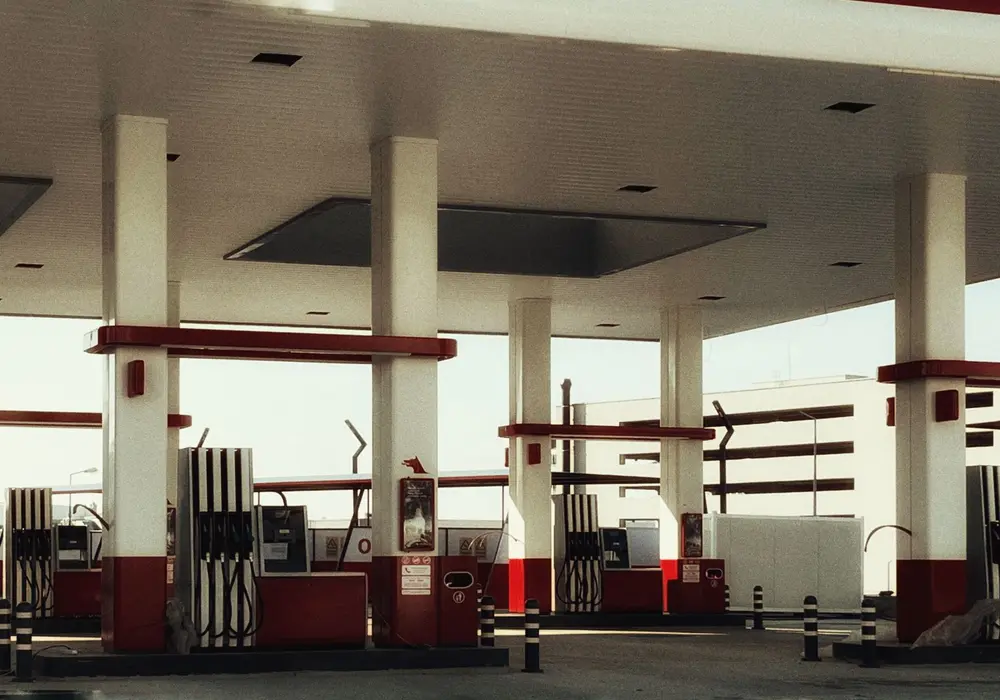
Underground Storage Tank Removal at a Closing Gas Station
Underground storage tanks are the regulated heart of any station closure. The permit to pull them comes from whichever agency runs the tank program locally, a city fire department in some places and county environmental health in others, and that agency's inspector watches the removal. A tank contractor working under that permit empties and inerts the tanks, the inspector is present when they come out, and soil samples are taken from beneath them.
We coordinate that work with the rest of the demolition. Product lines and vent piping are traced back to the tanks so nothing is left buried. Our excavators can open the tank pit and handle backfill once the inspector releases it, and our schedule is built around the inspector's dates rather than the other way around. Tank closure paperwork stays with the owner and their environmental consultant.
Soil Sampling, Contamination and What Happens Next
Older stations sometimes had leaks, and many sites already have a history with the regulators. When soil samples come back clean, the pit is backfilled and compacted and the site moves on. When they show petroleum, the oversight agency decides what follows, which may include excavating impacted soil, more sampling or monitoring wells.
Contaminated soil is a separate scope handled under the environmental consultant's direction, with its own profiling and disposal. We plan around it: clean concrete and asphalt are broken and stockpiled away from the pit, demolition areas unaffected by the tanks are finished first, and the excavation stays secured and fenced while decisions are made. That keeps one finding from stalling the whole lot.
How Gas Station Demolition Works, Step by Step
Station Records Review and Tank Permit Coordination
We review tank records and any environmental history with the owner and their consultant, then line up the tank removal permit and inspection with the fire department or county environmental health.
Building Survey, Utility Shutoff and Line Clearing
The store and bays are surveyed and the air district notified. Gas, electric and water are shut off, and product lines are cleared before dispensers or piping are disturbed.
Canopy, Dispenser and Building Demolition
Canopy deck and frame come down, dispensers are lifted, and the store, bays and car wash are demolished. Steel and concrete are separated as they come off.
Gas Station Tank Pull, Sampling and Backfill
Tanks are removed with the inspector on site and soil is sampled. Once released, the pit and island areas are backfilled in compacted lifts and the lot is graded.
Canopy Steel, Concrete and Recycling at Fuel Station Sites
Gas stations carry more concrete per square foot than most commercial lots. The forecourt under the canopy is usually reinforced concrete sized for fuel trucks, the islands are thick, and the tank pit is often capped with a concrete slab. All of it is broken with a hydraulic breaker, the rebar pulled, and the clean concrete crushed or hauled to a recycler.
Canopy steel, dispensers and the store's metal framing go to scrap. Concrete near the tanks is kept separate until the soil sampling results are back, since material touching petroleum-impacted soil may need different handling. Diversion records feed the city's CALGreen report, where the 65% minimum is easy to clear on a site dominated by concrete and steel.
Permits and Surveys for Gas Station Demolition
The building portion of the job follows the usual path. A certified asbestos consultant surveys the store and service bays, the Bay Area Air Quality Management District is notified under Regulation 11 Rule 2, and the city building division issues the demolition permit. Service bays may hold old lifts with hydraulic fluid in buried cylinders, waste oil tanks and floor drains to a clarifier, all of which need to be emptied and removed properly.
Corner stations front two streets, so encroachment permits and traffic control are common when trucks load at the curb or a driveway is closed. Driveway aprons and curb cuts may need to be restored to city standards once the site closes, which we price as part of the street-facing work when the city requires it.
Related Commercial Demolition Services
Commercial Demolition
Warehouse & Industrial Demolition
Office Building Demolition
Retail & Strip Mall Demolition
Restaurant Demolition
Apartment & Multifamily Demolition
Steel Structure Demolition
Gas Station Demolition Across the San Francisco Bay Area
Who oversees underground fuel tank removal at a gas station?
Depending on the city, either its fire department or the county's environmental health program. They issue the removal permit and inspect the excavation when the tanks come out. We coordinate demolition around their schedule.
What if the soil under the tanks is contaminated?
The oversight agency and the owner's environmental consultant decide the cleanup approach. That work is a separate scope, and we sequence the rest of the demolition so unaffected parts of the site keep moving.
Can the canopy be removed without demolishing the whole station?
Yes. Canopy replacement and removal on an operating station is a common smaller job. Lanes are closed in phases with fencing so the store and remaining pumps can keep serving customers.
How long does it take to clear a gas station lot?
The machine work is usually short. The schedule is set mostly by the tank removal permit and inspection dates, the soil sampling results, and utility shutoffs. We lay out a realistic timeline after reviewing the site records.
Request a Gas Station Demolition Quote
Call or use the quote form with the station address, the number of tanks if you know it, and any environmental reports. We will coordinate with your consultant and outline the sequence.
- Email: contact@sfbayareademolitioncontractor.com
- Serving all 9 Bay Area counties from San Jose