

Raw land clearing
Land Clearing for Bay Area Acreage, Hillsides and Overgrown Parcels
Undeveloped ground needs more than a mower. We clear brush, scrub trees, roots, dumped junk and forgotten fence lines from Bay Area acreage, then leave the soil covered and stable so surveyors, geotechnical crews or builders can get in.
Why Owners Start With Land Clearing on Raw Bay Area Ground
The parcels that need land clearing tend to have one thing in common: nobody has worked them in years. Think of a former prune or walnut orchard in south Santa Clara County gone wild with suckers and dead limbs, a pasture in the Sonoma hills taken over by coyote brush, or a vacant lot in east Contra Costa where tumbleweeds and dumped mattresses have piled against the fence for a decade.
Owners usually call for one of a few reasons. A land surveyor cannot shoot lines through dense brush. A geotechnical engineer needs a drill rig to reach boring locations. A buyer or appraiser wants to see the actual ground. Or the property is finally moving toward a building permit and the design team needs a clear view of slopes, drainage paths and the trees worth keeping. Clearing for each of those goals looks a little different, so we start by asking what the land is being cleared for.
Land Clearing Methods: Mulching, Grubbing and Root Raking
Mulching is the lightest touch. A track loader fitted with a forestry mulching head grinds standing brush and small trees in place, leaving a mat of chips on the surface. Nothing gets hauled, the roots stay in the ground to hold the slope, and the chip layer slows erosion through the first winter. It suits survey access, fire fuel reduction and land that will sit for a while before construction.
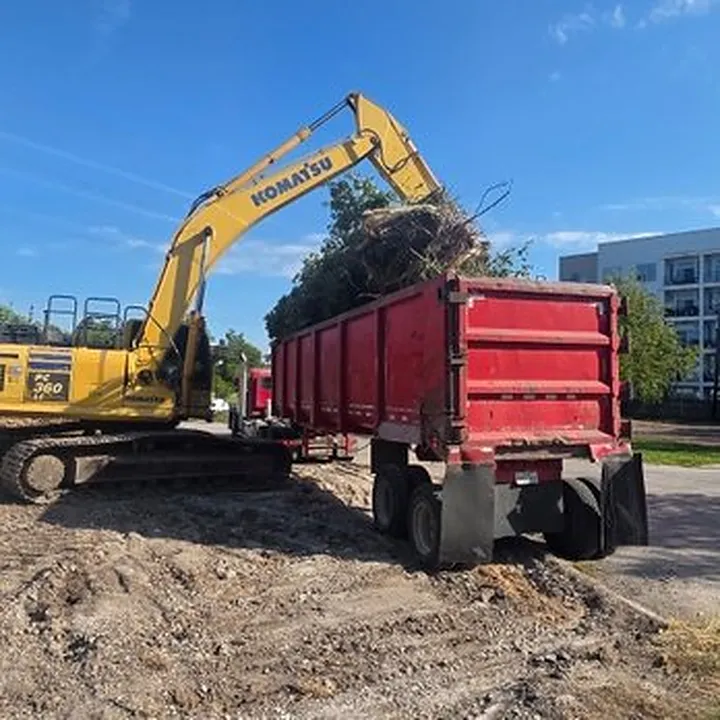
Grubbing goes further. An excavator with a thumb or a root rake pulls stumps and root masses out of the soil so the ground is ready for grading or foundations. That is the right call inside a future building footprint, driveway or septic field, where buried roots would rot and leave voids. Most parcels end up with a mix: grubbing where something will be built, mulching or selective cutting everywhere else, and hand crews with saws along creeks, property lines and around trees flagged to stay.
- Mulching for survey access and fuel reduction
- Grubbing inside building and driveway footprints
- Selective cutting near creeks and retained trees
- Hand work along fences and steep banks
Creek Setbacks, Wildlife and Nesting Season Rules for Clearing Land
Raw land is often habitat, and the rules follow from that. A seasonal creek or drainage swale across the parcel can bring a riparian setback, and work in or along the channel may need a streambed alteration agreement from the state wildlife agency or a permit from the local water district. Wetland areas, even small ones that only stay damp in winter, can trigger federal or state review. North Bay counties also regulate oak woodland and riparian vegetation in ways that affect how much can be cleared.
Birds set the calendar. Clearing during the nesting season, roughly late winter through summer, usually calls for a pre-construction nesting survey by a qualified biologist, and active nests get buffer zones until the young leave. Some parcels have special-status species concerns that a biologist identifies during planning. We would rather learn about a protected plant or a red-legged frog pond before the mulcher starts than after.
How Land Clearing Works, Step by Step
Walk the Parcel and Flag What Stays
We walk the land with you, mark property corners and trees to keep, and note creeks, slopes, wells and fence lines. Your goal for the land decides where we mulch, where we grub and where we leave growth alone.
Line Up Permits and Surveys for Land Clearing
Grading, tree or creek permits are confirmed with the city or county, and a biologist checks for nests or sensitive species if the season or site calls for it. Utility lines are marked through 811 before any digging.
Clear, Grub and Mulch the Vegetation
Fence wire and junk come out first. Then mulchers and excavators work through the brush and trees, grubbing roots inside future footprints and leaving roots in the soil elsewhere to hold the ground.
Stabilize Soil and Haul Off Debris
Cleared slopes get wattles, silt fence or a chip cover before the rains. Logs, stumps, metal and trash leave in sorted loads, and you get a parcel that is open, stable and ready for survey or design.
Erosion Control After Clearing Hillside Land
Stripped soil on a slope is a sediment problem waiting for the season's opening storm. Bay Area clay sheds water quickly and carries fine particles straight into ditches, culverts and creeks, which is exactly what local storm water rules aim to stop. On steeper ground we limit how much is grubbed at one time and leave root systems in place outside the areas that will be graded.
Before the rains, cleared slopes get straw wattles along the contours, silt fence at the downhill edge, and a cover of mulch, straw or the chipped brush itself. Temporary drainage keeps runoff from concentrating in one gully. Where a grading permit applies, these measures follow the approved erosion control plan, and inspectors may check them through the wet season. Replanting or hydroseeding, when the owner wants it, follows once the ground is shaped.
Old Fences, Wells and Junk Uncovered During Land Clearing
Brush hides a surprising amount. Rusted barbed wire and field fence run through the growth and wrap around mulching heads, so crews walk fence lines and cut them out by hand before machines go in. Dumped tires, appliances, car parts and household trash get pulled, sorted and hauled to the right facilities. Old irrigation pipe from orchard days often runs just under the surface.
Some finds need more than a truck. An abandoned well has to be destroyed under a permit from the county environmental health agency, and an old septic tank or cesspool needs to be pumped and properly abandoned. A collapsed barn or cabin on the land is a structure, so it gets an asbestos survey and BAAQMD notification before demolition. Anything resembling a fuel tank or stained soil stops work in that spot until the right agency weighs in.
What Shapes the Price of Clearing Land per Acre
Acreage alone tells you very little. A flat acre of dry grass and scattered coyote brush clears quickly with a mulcher. An acre of mature eucalyptus, acacia and Himalayan blackberry on a slope takes several times longer and produces far more material to process. Terrain, soil moisture and rock affect which machines can work safely and how fast they move.
The other big variable is what leaves the site. Mulching in place avoids hauling entirely, while grubbing generates stumps and root masses that must be trucked away. Junk removal, fence pulling and well or septic abandonment add their own line items. Biological surveys, permits and erosion control are part of the cost on many rural parcels. After a walk of the property, we can price each piece so you see where the money goes.
Related Site Clearing Services
Site Clearing
Lot Clearing for New Construction
Excavation & Grading
Tree & Stump Removal
Debris Hauling
Construction Cleanup
Brush & Defensible Space Clearing
Land Clearing Across the San Francisco Bay Area
Is it better to mulch or haul away cleared brush?
Mulching in place is usually cheaper and protects the soil, so it works well for fire fuel reduction and land that will not be built on soon. Where foundations, driveways or septic systems will go, roots and organic matter need to come out so the soil can be compacted properly.
Can you clear land near a creek on my property?
Often, but within limits. A creek channel can mean a state streambed agreement or a water district permit, and setbacks often limit how much growth comes out. We identify the channel and any setback during planning and keep hand crews, not heavy machines, in sensitive areas.
Why does nesting season affect land clearing?
State and federal law protect active bird nests, so clearing during the breeding months generally requires a biologist to survey first. If an active nest is found, a buffer stays in place until the birds fledge. Scheduling clearing for fall often avoids the delay.
Do you remove old barns and sheds found on raw land?
Yes. Any structure gets the asbestos survey BAAQMD requires before demolition, plus the district notification. If the survey finds hazardous materials, a certified abatement contractor handles them, and our crew demolishes and hauls the rest once the building is cleared for work.
How long does it take to clear an acre of land?
There is no single answer, because density, slope and the clearing method matter more than area. Grass and light brush can go in a day, while heavy trees and root grubbing on a hillside take much longer. We give a realistic schedule after seeing the parcel.
Get a Land Clearing Quote for Your Parcel
Share the property location, rough acreage and what you plan to do with the land. Call us or fill out the online form, and expect an answer within one business day.
- Email: contact@sfbayareademolitioncontractor.com
- Serving all 9 Bay Area counties from San Jose