

Fire-season brush clearing
Brush and Defensible Space Clearing for Bay Area Hillside Homes
Homes in the hills and canyons around the bay need fuel cleared before summer, not after the inspection notice arrives. We cut, thin and remove brush, dead vegetation and ladder fuels around houses in fire hazard areas, working zone by zone outward from the walls.
Defensible Space Requirements in Bay Area Fire Hazard Zones
California law requires owners of homes in and near wildland areas to maintain defensible space up to 100 feet from structures, or to the property line if that comes first. Local fire agencies across the region enforce it through annual inspections, and many cities run their own vegetation management or weed abatement programs with spring deadlines. Areas mapped as fire hazard severity zones, including much of the East Bay hills, Marin, the Peninsula foothills and the North Bay, see the most attention.
The rules are not the same everywhere. Some cities require more than the state minimum on steep slopes or along roads used for evacuation, and inspection timing varies by agency. A notice from the fire department usually sets a date to complete the work. We check the requirements for the property's jurisdiction and plan the clearing to meet them before that date.
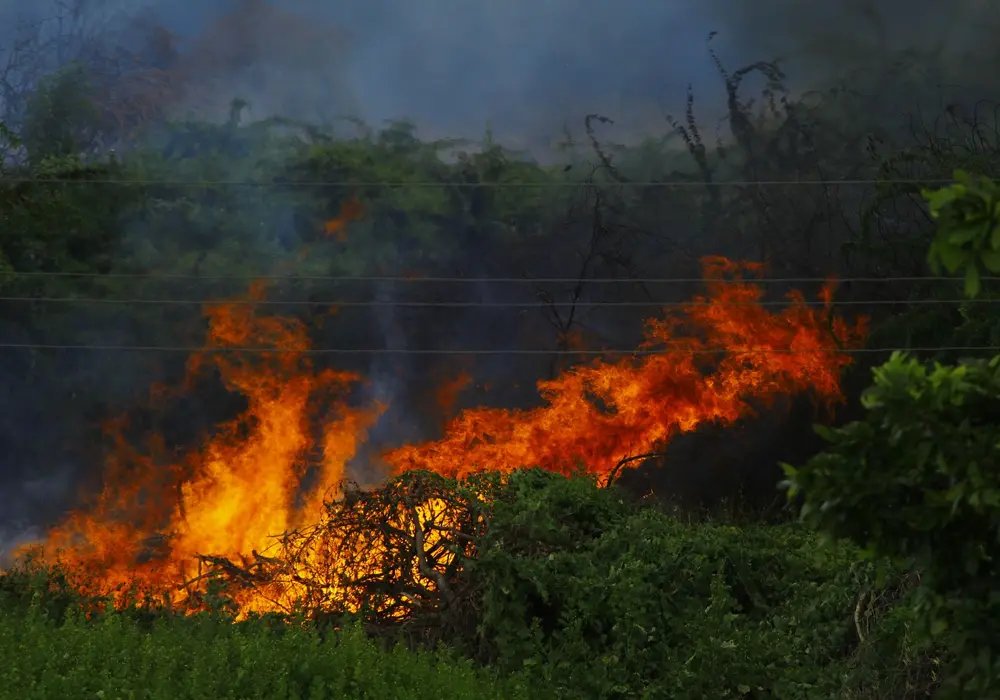
Zone by Zone: What Gets Cleared Around the House
Defensible space is organized by distance from the house. The first five feet, sometimes called Zone 0, is where embers do the most damage, and state guidance focuses on keeping that strip free of combustible mulch, dead plants and woody material touching the walls. From the house out to about 30 feet, the goal is lean, clean vegetation: no dead growth, trees limbed up and spaced so fire cannot jump from one crown to the next.
From 30 to 100 feet, the target is reduced fuel rather than bare dirt. Grass is cut low, brush is thinned into separated islands, and lower branches are removed so a ground fire cannot climb into the tree canopy. Rules for Zone 0 have been developing at the state level, so we check what is currently required for the property before setting the plan.
- Dead plants and woody material off the walls
- Tree limbs raised off the ground and off the roof
- Brush thinned into separated groupings
- Dry grass cut short across the zone
- Wood piles moved away from the house
Brush Clearing Methods on Steep and Rocky Slopes
Hillside properties are where most defensible space work happens, and slope changes the method. Hand crews with brush cutters, chainsaws and pole saws do most of the work on steep ground, cutting brush close to the soil but leaving roots in place so the hillside does not slide or erode in winter. Cut material is dragged to a chipper staged at the road or driveway.
On gentler, accessible ground, a track-mounted masticator or mulching head can thin brush faster and leave chips as ground cover. Grubbing, which pulls roots out, is generally the wrong choice for fire clearing on slopes because it leaves loose soil exposed to winter rain. The aim is to reduce fuel while keeping the hillside stable, not to strip the property bare.
How Brush and Defensible Space Clearing Works, Step by Step
Map the Defensible Space Zones Around the House
We walk the lot with you, mark distances from the house, note slopes, protected trees and high-risk plants, and review any notice from the fire agency so the work meets the right standard and deadline.
Cut Ladder Fuels and Thin the Brush
Crews remove dead vegetation, limb trees up from the ground, cut grass low and thin brush into separated groups, starting close to the house and working outward through each zone.
Chip, Spread or Haul the Cut Brush
Cut material is chipped at the road, spread thin where the plan allows, or hauled to green waste facilities. Nothing is left in deep piles that could fuel a fire later in the season.
Leave the Site Ready for Fire Inspection
We walk the finished zones with you and review what was done, so you can show the fire inspector the completed defensible space and plan maintenance for next year.
Fire-Safe Practices During Dry Season Brush Clearing
Clearing brush can start the fire it is meant to prevent. Metal blades striking rock throw sparks, hot mufflers ignite dry grass, and chainsaw work in midday heat can be risky. Crews carry extinguishers and water, keep spark arresters on equipment, and avoid mowing dry grass with steel blades during the hottest hours.
Work stops on red flag warning days and when local fire agencies restrict equipment use. Many clearing jobs are best scheduled in spring, after grass has grown but before it fully cures, when the fire risk from the work itself is lower and inspection deadlines are still ahead. Chipped material is spread thin or hauled, never left in deep piles that can smolder.
Juniper, Broom and Eucalyptus Litter: High-Risk Fuels Near Hillside Homes
Some plants deserve special attention. Juniper hedges and shrubs hold oils that burn hot and fast, and they are common foundation plantings around older hillside homes. French and Scotch broom spread aggressively across Marin and the East Bay hills and form dense, dry stands. Eucalyptus sheds bark strips and leaf litter that pile up under trees and against fences.
Other common problem fuels include dead bamboo, ivy climbing into trees, pine needles collecting under decks and beside siding, and dried annual grass. We identify these during the walk-through and prioritize them in the work plan. Removing a juniper hedge or a broom thicket close to the house often does more for fire safety than clearing a larger area farther out.
Annual Upkeep and What Affects Brush Clearing Cost
Defensible space is not a one-time project. Grass regrows every winter, brush sprouts back, and leaf litter accumulates. The first clearing on a neglected property usually takes the most work; yearly maintenance after that is lighter and faster, especially when roots were left in place and regrowth is predictable.
Cost depends on how dense and tall the vegetation is, how steep the property is, how far material has to be dragged to a chipper or truck, and whether chips can stay on site or must be hauled. Removal of larger trees, permits for protected species, and poison oak, which slows hand crews considerably, also affect price. We quote after walking the property.
Related Site Clearing Services
Site Clearing
Land Clearing
Lot Clearing for New Construction
Excavation & Grading
Tree & Stump Removal
Debris Hauling
Construction Cleanup
Brush & Defensible Space Clearing Across the San Francisco Bay Area
How far from my house do I need to clear brush?
State law sets defensible space up to 100 feet from structures or to the property line, whichever is closer. Some local agencies add requirements on steep slopes or along evacuation routes. We check the rules for your jurisdiction during the walk-through.
Do you remove all the vegetation on the property?
No. Defensible space means reducing and separating fuel, not stripping the land. We remove dead material and ladder fuels, thin brush and keep roots in the soil on slopes to prevent erosion.
When is the best time to schedule brush clearing?
Spring is usually best, after the grass has grown but before it dries out, and ahead of most inspection deadlines. Clearing in late summer is possible but riskier, and crews must stop on red flag warning days.
Can you take out juniper or broom close to my house?
Yes. Juniper and broom are among the most flammable plants near homes, and removing them close to the house is often one of the most useful steps. We cut, pull or grind them and haul the material away.
What happens to the brush you cut?
It is chipped on site and either spread thin as mulch where the plan allows or hauled to a green waste facility. Thick piles of chips are avoided, since they can hold heat and become fuel themselves.
Request a Brush Clearing Quote Before Fire Season
Tell us about the property, its slope and any fire department notice you received. Call (510) 826-3578 or request a quote, and we answer within one business day.
- Email: contact@sfbayareademolitioncontractor.com
- Serving all 9 Bay Area counties from San Jose