
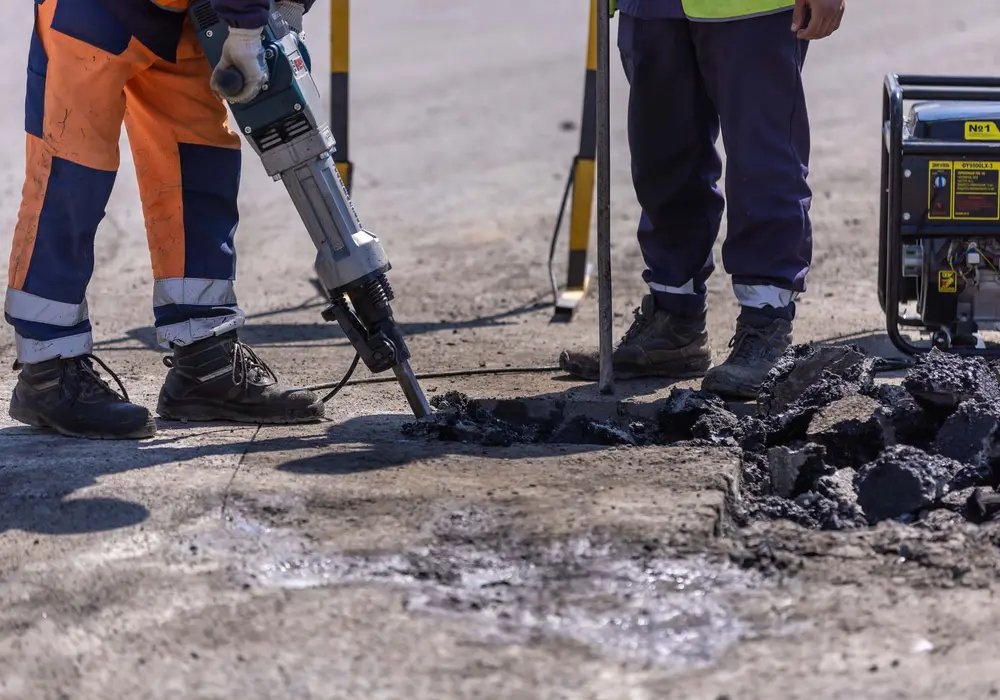
 Driveway Removal
Cracked, root-lifted or outdated driveways broken out and hauled, with the street apron and curb cut permitted through the city and the base left graded for pavers or new concrete.

Concrete & Asphalt Removal
We break out, saw and haul concrete and asphalt from homes, commercial lots and building sites in all nine Bay Area counties, then route the rubble to crushers so it comes back as aggregate instead of filling a landfill.
Concrete removal is the branch of demolition that deals with anything poured or paved: flatwork, footings, walls, and the asphalt laid over a bed of base rock. Around a house that usually means Driveway Removal, Patio & Sidewalk Removal, or a Concrete Slab Removal under a garage or an old addition. When a whole building has been cleared, Foundation Removal takes out the perimeter footings, stem walls, piers and grade beams so the next foundation can be formed on clean, compacted soil.
Other jobs are about control more than volume. Concrete Cutting & Sawing makes straight, measured cuts for a new doorway, a plumbing trench or a crisp edge where old concrete meets new. Property managers call us for Asphalt & Parking Lot Removal. Hillside owners call about Retaining Wall Removal, which takes more planning than most people expect because the soil behind the wall has to go somewhere. Concrete Crushing & Recycling closes the loop by turning rubble into aggregate that can go back under a new slab or building pad.
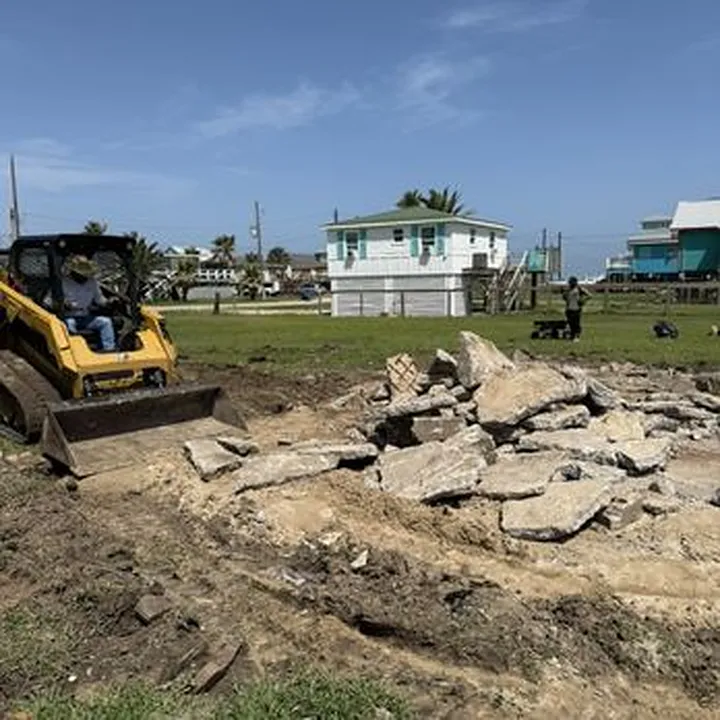
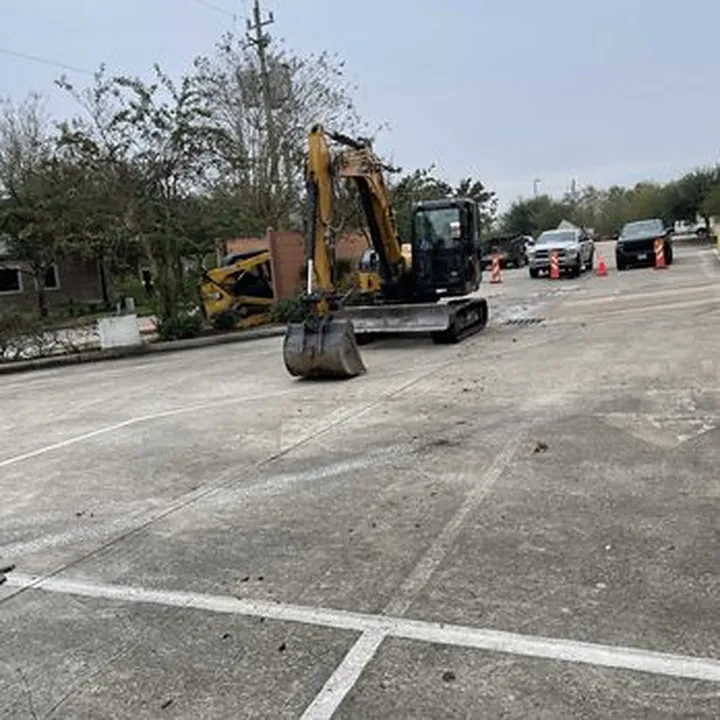
The machine decides how fast concrete comes out and how much of the yard gets torn up in the process. Thick reinforced footings call for a hydraulic breaker on a full-size excavator, with a thumb to pick up the broken chunks and set them in the truck. Driveways and patios usually go faster with a breaker on a skid steer or compact track loader. Where a side yard is narrower than a pickup, a mini excavator or a narrow-track loader fits through, and in basements or occupied buildings we switch to hand-held electric breakers that keep vibration and exhaust down.
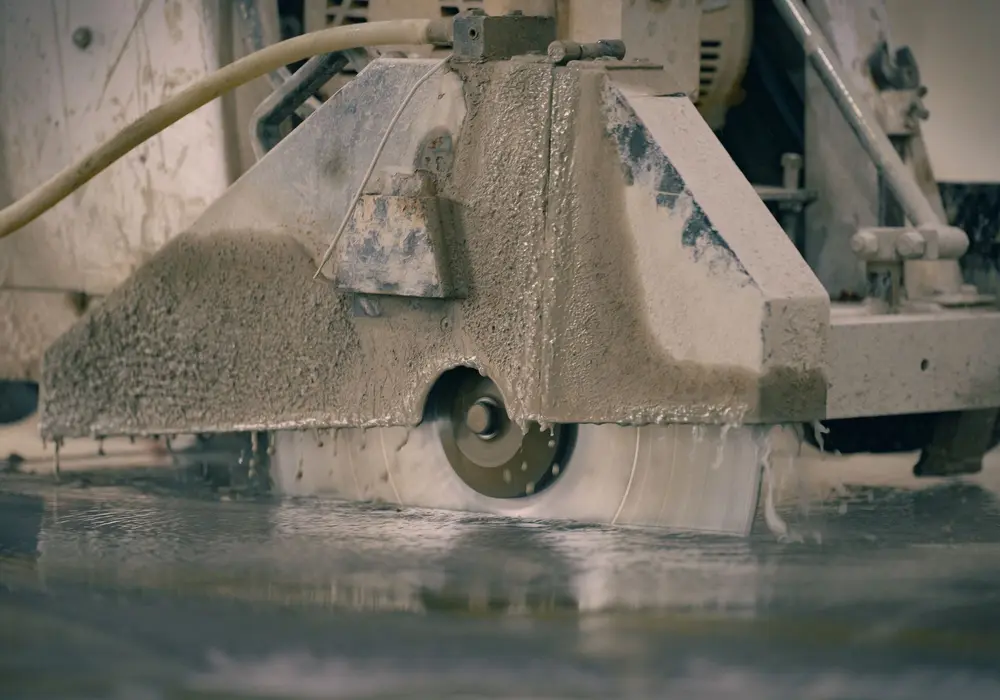
Saws handle everything a breaker would damage. A walk-behind flat saw scores the line where removal stops so the part that stays doesn't crack along with the rest. Wall saws and diamond wire saws cut thick walls and footings, and core drills bore round holes for pipe and conduit. Before any blade goes in, the cut path gets scanned for rebar, post-tension tendons, electrical conduit and radiant heating tubing, which is common inside Eichler slabs in Palo Alto, Sunnyvale and parts of San Mateo County.
Every job starts underground. We open an 811 locate ticket so public utilities mark their lines, then look for the private ones the marks don't cover: irrigation, low-voltage wiring, a sewer lateral, a gas line running to a barbecue. If a gas or electric service crosses under the concrete, it gets shut off or rerouted before breaking starts, by PG&E or by the city-owned utility in places like Santa Clara, Palo Alto and Alameda. Nobody wants to find a live service with a hammer.
Next comes erosion and sediment control: wattles, inlet covers on nearby storm drains and a stabilized spot for trucks to load. Then the crew saw-cuts the limits, breaks the concrete, loads it and hauls it. If the next surface needs a deeper section, we dig out base rock and soil to the depth the designer specifies. The job ends with a fine-graded, compacted subgrade, and on larger sites a soils engineer tests compaction before anyone pours on it.
Plain flatwork on private property often needs no building permit at all. The picture changes at the property line. A driveway approach, curb, gutter or public sidewalk sits in the right-of-way, and removing it calls for an encroachment or street-opening permit from the city's public works department, or from the county for unincorporated land. Foundation removal usually rides on the demolition permit for the building, and a retaining wall holding up a slope or a neighbor's yard may need an engineer before anything is touched.
BAAQMD Regulation 11 Rule 2 governs building demolition: a certified asbestos consultant surveys the structure, and the air district is notified before work starts. Slabs can carry their own hazards, such as old vinyl tile and black mastic glued to the surface or cement pipe buried below it. When those turn up, a certified abatement contractor we schedule removes them first. On the worker side, Cal/OSHA's silica rules shape every cut, which is why our saws run wet or with vacuum shrouds.
CALGreen sets a 65 percent diversion floor for the nonhazardous waste a building or demolition project generates, and many Bay Area cities collect a waste plan and a deposit to enforce it. Concrete and asphalt help more than any other material, because they are heavy and almost entirely recyclable. We keep the recycling yard's weight tickets for your final diversion report.
Concrete Removal
Driveway RemovalCracked, root-lifted or outdated driveways broken out and hauled, with the street apron and curb cut permitted through the city and the base left graded for pavers or new concrete.
 Patio & Sidewalk Removal
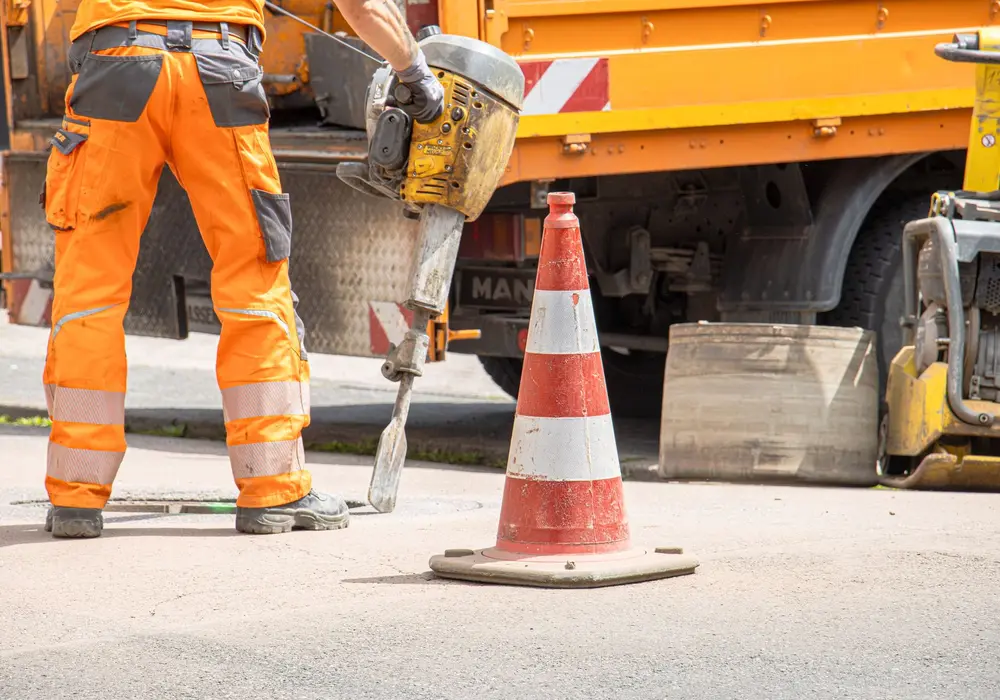
Backyard patios, garden walkways, steps, hot tub pads and front sidewalk panels broken out by hand or with compact machines, carried through tight side yards and sent to recyclers.
 Foundation Removal
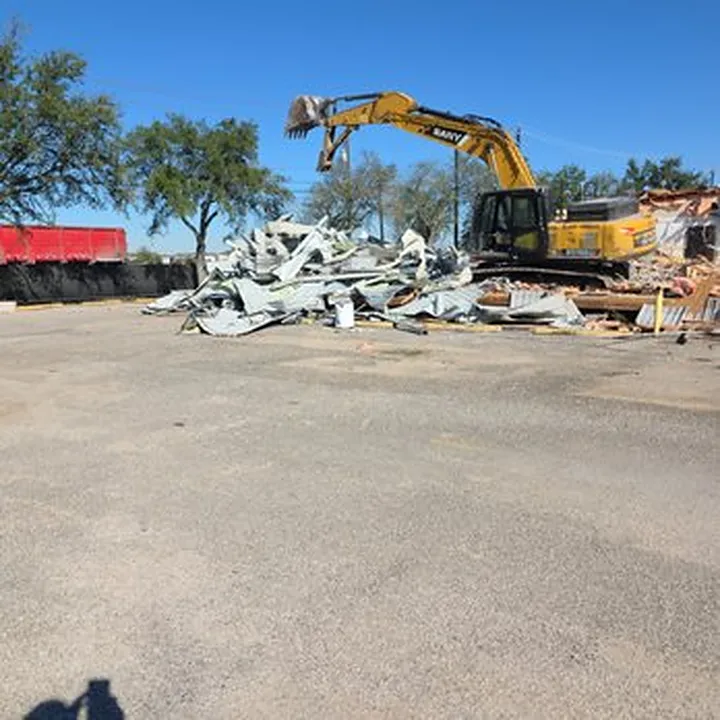
Perimeter footings, stem walls, piers, basement walls and hillside grade beams broken out after demolition, with the excavation backfilled and compacted so the new foundation starts on sound ground.
 Concrete Slab Removal
Garage, house and warehouse slabs scanned for cables and tubing, sawn into liftable sections and broken out, including interior slab work inside buildings that stay in use.
 Concrete Cutting & Sawing
Flat sawing, wall sawing, wire sawing and core drilling for doorways, plumbing trenches and clean removal lines, with every cut scanned first and slurry kept out of storm drains.
 Asphalt & Parking Lot Removal
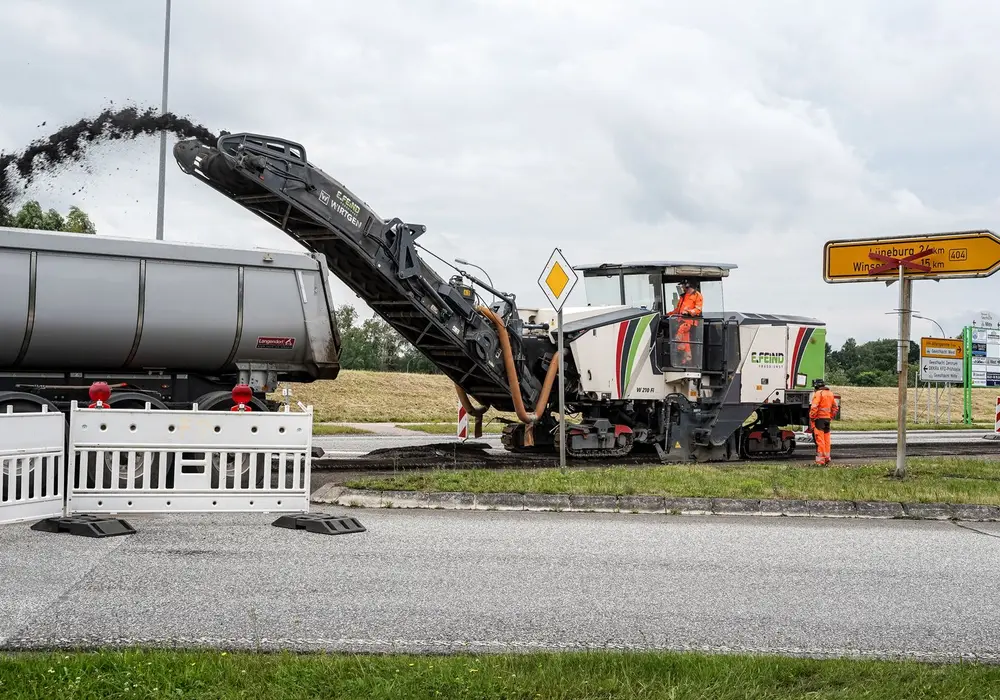
Full-depth asphalt removal for parking lots, private roads and driveways, including curbs, landscape islands, wheel stops and light pole bases, with asphalt kept separate for recycling.
 Retaining Wall Removal
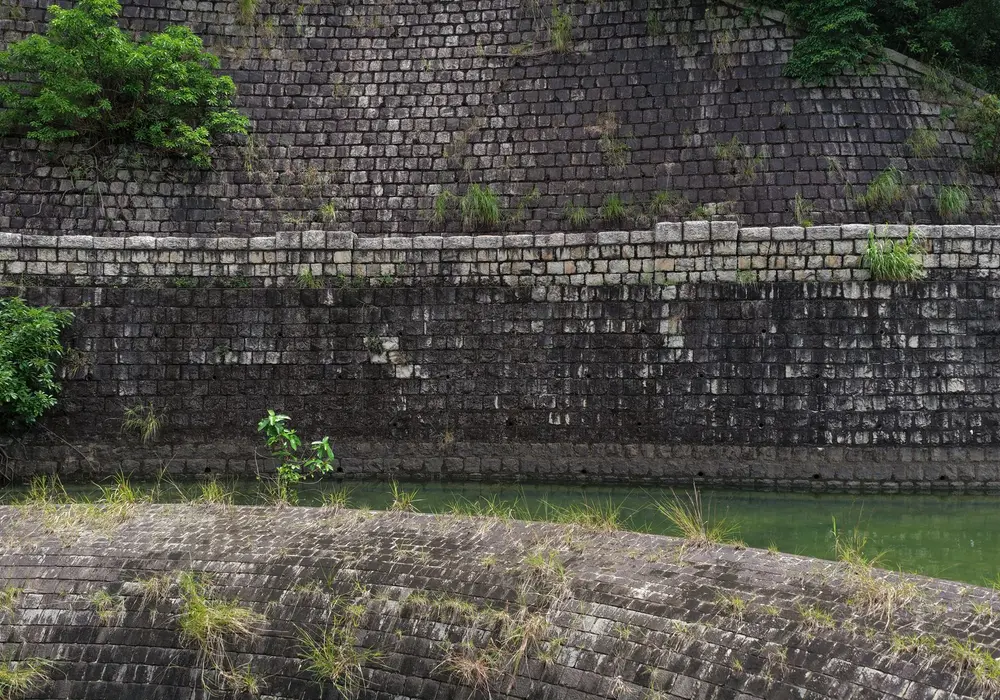
Leaning, cracked or undersized retaining walls in concrete, block, timber or stone taken down from the top, with the footing removed and the slope protected until the new wall is built.
 Concrete Crushing & Recycling
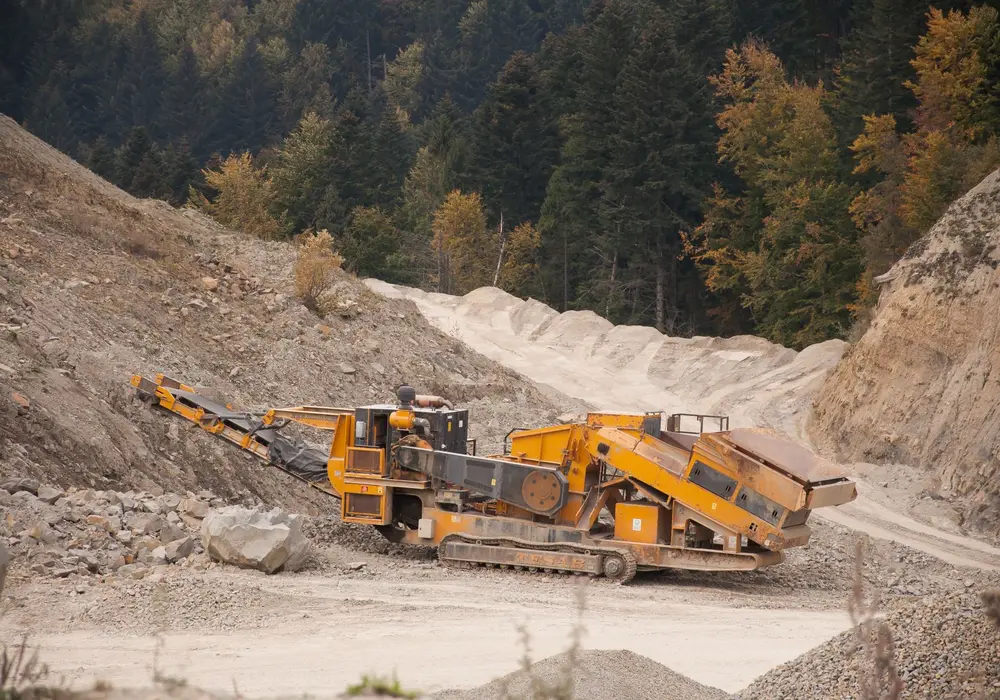
Demolition concrete sorted, stripped of rebar and crushed into recycled aggregate on site or at a processing yard, with weight records kept for CALGreen and city waste plans.
Advantage
The cut path is scanned for rebar, post-tension cables, conduit and radiant tubing before a blade touches it, so the crew knows what is inside the concrete instead of finding out the hard way.
Saw cuts mark exactly where removal stops. The sidewalk, garage slab or footing you're keeping ends at a straight, sound edge that a finisher can tie into without chasing cracks.
Concrete, asphalt, steel and soil leave in separate loads. That keeps disposal costs down and gives you weight tickets that count toward the CALGreen diversion target.
Narrow-track loaders, mini excavators and electric breakers reach backyards on lots where a full-size machine would never fit, with plywood laid down to protect lawns and paths.
There's no honest per-square-foot price for concrete removal until someone has looked at the job, because the same area can hide very different work. A four-inch patio with light wire mesh breaks in a fraction of the time of an eight-inch slab tied with heavy rebar in both directions. Access matters as much as thickness. If a loader can drive to the concrete, the work moves quickly; if every piece leaves in a motorized buggy through a garden gate, labor climbs. Concrete is also heavy, so trucks reach their legal weight limit long before the bed looks full.
Load quality is the cost driver owners can influence. Clean concrete goes to a crusher as a recyclable product. Concrete mixed with dirt, roots, wood forms and trash is treated as mixed debris, which costs more to dispose of and does less for your diversion numbers. Our crews sort at the loading point for that reason.
Breaking is usually the quick part. Schedules stretch because of the steps around it: waiting on a right-of-way permit, booking a utility shutoff, lining up an inspection of the subgrade or riding out a wet week. Clay soils across the South Bay valley floor and the East Bay flats turn to grease in winter, and loaded trucks can't cross a soaked yard without rutting it. We give owners a realistic window once the permit path and utility work are known, and we don't promise dates that depend on someone else's calendar.
Breakers are loud and saws throw dust, so neighbors hear about heavy days before they happen. Most Bay Area cities limit construction noise to set daytime hours, and we plan the hammer work inside them. Water goes on the concrete while it's broken, the street gets swept at the end of each day, and trucks load from a spot that keeps mud off the pavement. Where vibration could reach an older house next door, we use smaller breakers or saw the concrete into pieces and lift them out.
Almost none of what we break out needs to be buried. Clean concrete goes to crushing facilities that screen it into recycled aggregate base, the gravel layer under new roads, slabs and driveways. Magnets pull the rebar and wire mesh out of the crushed stream, and that steel is sold as scrap. Asphalt travels separately to plants that blend it back into new paving mix, so we never put the two in the same truck. Base rock dug from under a slab is often clean enough to reuse.
On big commercial and redevelopment sites with room to work, a portable crusher can process the rubble where it lies. The output stays on site as fill or base where the soils engineer approves it, and dozens of truck trips through residential streets never happen. Smaller jobs don't justify the setup, so the material is hauled out and recycled. In both cases the paperwork records weights and destinations for the city's diversion review.
Removing a private patio or backyard slab usually doesn't need a building permit. Work on a driveway approach, curb or city sidewalk does, through the public works department. Foundations and retaining walls are judged case by case, and we confirm with the city or county before quoting.
Yes. We saw-cut the boundary first, usually with a walk-behind flat saw, so the breaker works only inside the cut. The concrete you keep ends at a straight edge instead of a broken one.
Clean concrete goes to a recycling facility that crushes it into aggregate base, and the rebar is separated for scrap. Asphalt goes to a separate recycler. On large sites the concrete can sometimes be crushed and reused right there.
A large breaker does send vibration through the ground, which is why we size the equipment to the setting. Near older foundations we saw the concrete into pieces and lift them, or use smaller breakers, to keep vibration low.
We can. Many jobs end with the base excavated to the depth the next contractor needs, the subgrade compacted and the surface graded to drain. Tell us what's going in next and we'll leave the ground ready for it.
Usually. Narrow-track loaders fit through many side gates, and where they can't, crews break the concrete with electric hammers and move it out in motorized buggies to a truck parked at the curb.
Call (510) 826-3578 or send the quote form with the address and a short description of the concrete that needs to go. Form requests get an answer within one business day.