

Kitchen demolition services
Kitchen Demolition and Cabinet Tear-Out for Bay Area Remodels
A kitchen tear-out clears the room to bare framing and subfloor so the plumber, electrician and cabinet installer can start on the day they were booked. We coordinate the survey, the utility caps, the protection and the haul-off.
Why Kitchen Demolition Needs More Planning Than Other Rooms
No other room packs as many systems into so few square feet. A typical kitchen has a gas line or a 240 volt range circuit, hot and cold supplies, a drain with a vent, a dishwasher connection, a refrigerator water line, a hood duct through the roof or wall, and several dedicated circuits behind the backsplash. Every one of them has to be shut off and capped in the right order before cabinets are pulled, or the crew ends up cutting into something live.
Kitchens are also heavy. Stone countertops, cast iron sinks, built-in ovens and tile set in mortar add up quickly, and all of it has to leave through a front door, a side yard or an elevator without gouging floors along the way. Planning the exit path and the bin location is as much a part of kitchen demolition as the removal itself.
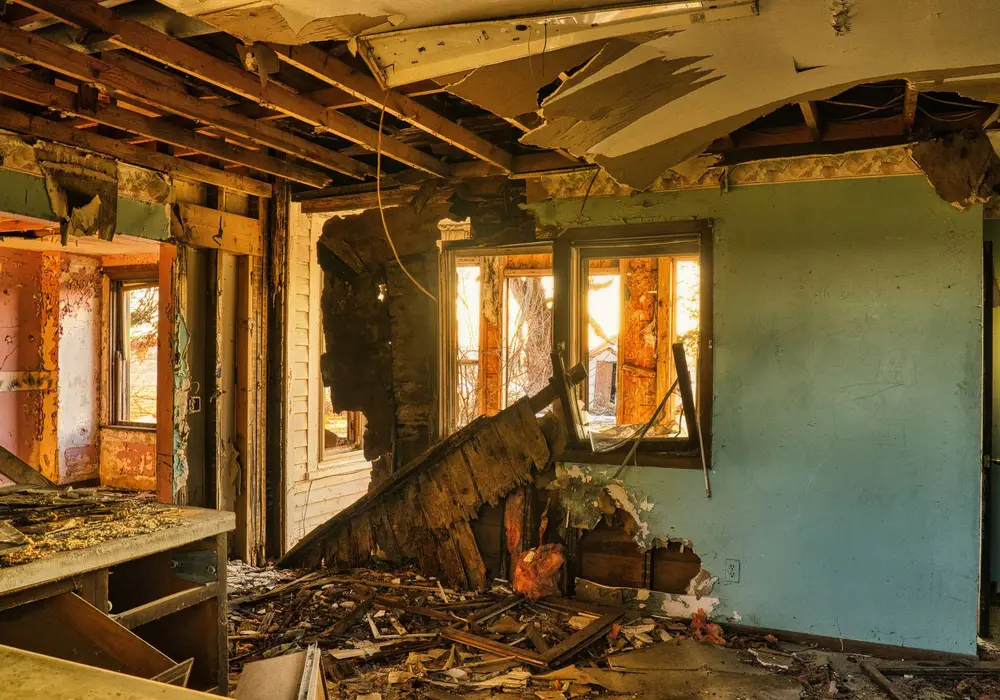
Cabinets, Countertops and Appliances Removed in a Kitchen Demolition
A full kitchen tear-out normally includes upper and lower cabinets, the countertops and backsplash, the sink and faucet, the range hood, built-in appliances, pantry shelving and the flooring down to the subfloor. Partial scopes are common too: some owners keep the layout and only replace counters and backsplash, others keep the cabinets and replace everything around them. We write the scope room by room so nothing is assumed.
Each material comes out a different way. Granite and quartz slabs are cut into carryable pieces with a diamond blade or lifted whole on a slab cart when the owner wants them reused. Tile counters from the 1950s and 1960s often sit on a thick mortar bed over wire lath and come off with a demolition hammer. Refrigerators and freezers need their refrigerant recovered before the shell can be recycled, so they are handled separately from the rest of the debris.
- Upper and lower cabinets, pantry units and islands
- Stone, tile, laminate or butcher block counters
- Backsplash tile and the wallboard behind it
- Range hood, ovens, cooktop, dishwasher and disposal
- Flooring and underlayment down to the subfloor
Soffits, Old Wiring and Hidden Damage Behind Kitchen Cabinets
Once the cabinets are off the wall, the kitchen shows its history. Soffits above the uppers are often boxes built to hide ductwork, a plumbing vent or a beam, so we open them carefully and stop if something structural or active is inside. In older Bay Area homes we regularly see ungrounded wiring, abandoned gas stubs from a previous range location and galvanized supply pipe that the remodel will replace anyway.
The cabinet under the sink is where slow leaks live. Rotted subfloor, stained joists and occasionally mold show up after the base cabinet comes out. When that happens we stop, photograph it and tell you and your contractor what we found, because repair belongs to the framing trade and mold cleanup belongs to a remediation contractor. Demolition continues around the area once a plan is agreed.
How Kitchen Demolition Works, Step by Step
Survey the Kitchen Materials Before Demolition
A certified asbestos consultant samples suspect materials like sheet vinyl, mastic, joint compound and ceiling texture. Anything positive is removed by a certified abatement contractor we schedule, before the kitchen demolition crew begins.
Shut Off and Cap Kitchen Utilities
The gas line to the range, the sink supplies and drain, the dishwasher line and the kitchen circuits are shut down and capped by the right trade, so nothing live is left behind a cabinet or wall.
Protect the Home and Remove Kitchen Components
Zip walls and floor protection go up, then the crew removes items from the top down: hood and upper cabinets, counters and backsplash, base cabinets and appliances, and finally the flooring to subfloor.
Haul, Sort and Hand Over a Clean Kitchen Shell
Debris is sorted into metal, wood, rubble and reusable items, hauled off site, and the room is vacuumed and swept so the plumber and electrician walk into an open, safe space.
Living at Home During a Kitchen Demolition
Plenty of households keep living at home through a kitchen tear-out, and with some preparation it works. Before we start, it helps to set up a temporary kitchen in a garage, laundry room or dining room with the refrigerator, a microwave and a utility sink. We keep the rest of the house on its own circuits and water supply wherever the plumbing layout allows, so only the kitchen goes dark.
Dust is the main concern in an occupied house. The kitchen is sealed off with zip walls, the forced air return in or near it is covered, and a HEPA air scrubber runs while the crew is working. Floors between the kitchen and the exit door are covered with protection board. If anyone in the household has respiratory issues, tell us before the start date so we can plan the louder and dustier steps around them.
Kitchen Demolition in Condos, Eichlers and Pre-War Bay Area Homes
Condo and townhouse kitchens add the HOA to the process. Most associations want a certificate of insurance, a scheduled elevator with pads hung, set work hours and a plan for where the bin or trailer sits. Shared walls mean the tile hammer is heard next door, so the noisiest work is grouped into as few hours as possible. In buildings with a concrete deck, the subfloor is the slab, and anything glued to it takes extra time.
Eichler kitchens sit on a slab with radiant heat tubing, so flooring removal is done with scrapers and light hammers rather than heavy breaking. Their wall cabinets often hang on post-and-beam walls that hold the roof. Pre-war kitchens in older neighborhoods bring lath and plaster walls and soffits, and every surface installed before 1978 is treated as potentially containing lead paint until it has been tested.
Saving Cabinets and Appliances From a Kitchen Demolition
Not everything in an old kitchen has to become debris. Solid wood cabinet boxes, working appliances, stone slabs large enough to reuse, and light fixtures can go to reuse outlets, a relative's garage or a rental unit. Saving them means removing them by hand, unscrewing rather than prying, labeling doors and storing pieces where they will not be damaged. Tell us at the walkthrough what you want kept, because it changes how the crew approaches the room.
What does not get reused is separated for recycling. Metal from appliance shells, sinks and old pipe goes one direction, clean wood another, and tile and stone rubble a third. That sorting is what lets your project meet the CALGreen requirement to divert at least 65% of nonhazardous debris, and we hand over the receipts your city may ask for at final inspection.
Related Interior Demolition Services
Interior Demolition
Bathroom Demolition
Commercial Strip-Out
Selective Demolition
Wall Removal
Flooring & Tile Removal
Ceiling Removal
Kitchen Demolition Across the San Francisco Bay Area
How long does kitchen demolition take?
The tear-out itself is usually a short job once surveys are back and utilities are capped. Tile counters on mortar beds, layered flooring and condo elevator rules can stretch it. We give a schedule after walking the kitchen.
Do I need a permit for kitchen demolition?
Removing cabinets and finishes often does not need its own permit, but the remodel that follows usually does, and moving walls, gas or plumbing almost always requires one. Many contractors pull the remodel permit before demolition so the work is covered from day one.
Who disconnects the gas range before a kitchen tear-out?
A plumber or the appliance installer shuts the appliance valve and caps the line. If the gas line will be relocated, the plumber may cap it further back. We coordinate the timing so the range is safely disconnected before our crew arrives.
Can you remove my cabinets without damaging them?
Yes, if you tell us before the job starts. Careful removal takes more time than standard demolition, so it is priced separately, and the cabinets need a dry place to be stored or a pickup arranged.
What if asbestos or water damage shows up mid-demolition?
We stop work in that area, document it and let you know right away. Suspect material is sampled and, if positive, removed by a certified abatement contractor. Rot and mold are handed to the framing and remediation trades before we continue.
Get a Kitchen Demolition Quote
Send the address, a rough kitchen size and the date your remodel contractor needs the room empty. Request a quote online and we reply within one business day.
- Email: contact@sfbayareademolitioncontractor.com
- Serving all 9 Bay Area counties from San Jose