

Emergency Demolition
Emergency Demolition for Unsafe and Damaged Bay Area Structures
When a fire, a car through the storefront, a slipping hillside or a fallen oak leaves a building unsafe, the first priority is a secure site. We then take down what has to come down, in coordination with the building official and your adjuster.
When Does a Damaged Building Need Emergency Demolition?
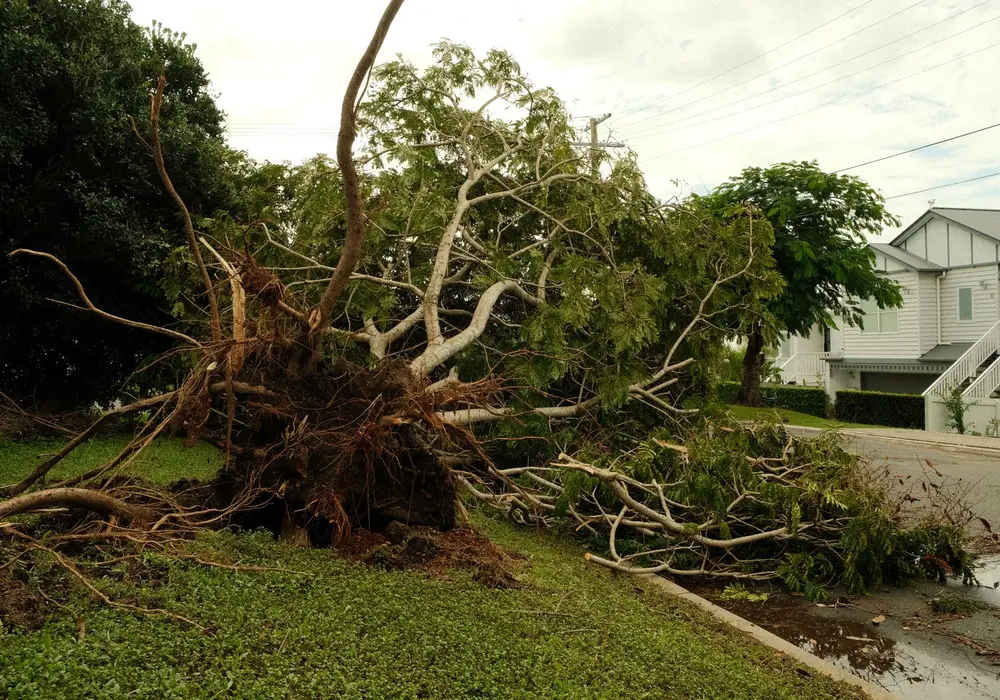
A building usually reaches this point after an inspector posts it as unsafe and decides it cannot simply be shored and fenced. Typical triggers are a house fire that has burned through bearing walls, a vehicle that has taken out a storefront column, a retaining wall or slope failure undermining a hillside home, or a heavy tree that has crushed a roof. In each case the concern is not the owner's convenience. It is a wall that could fall onto a sidewalk, a neighbor's house or a crew working nearby.
Not every red tag ends in demolition. Plenty of damaged structures are braced, fenced and left standing until an engineer decides whether they can be repaired. We look at the building with that question in mind and will tell you when shoring or partial removal makes more sense than a full teardown. When the building official orders removal, or the engineer confirms the structure cannot be saved, the work moves forward on an accelerated track.
What Happens in the First Hours After You Call
The first conversation is about hazards and authority. We ask whether anyone is still inside, whether the fire department has released the scene, whether gas and power have been shut off at the meter or the street, and who has the legal right to authorize work on the property. Answers to those questions decide whether a crew comes out to secure the site right away or waits for a release.
On arrival the crew walks the perimeter from a safe distance, sets up temporary fencing and signs, and checks that utilities are dead rather than assuming it. PG&E handles gas and electric in most of the region, though Silicon Valley Power, City of Palo Alto Utilities or Alameda Municipal Power may be the provider depending on the address. Water is shut off at the meter. If debris is blocking a sidewalk or traffic lane, we contact the city about traffic control before moving anything.
- Confirm the fire department or police have released the site
- Fence and sign the hazard zone
- Verify gas, electric and water are off
- Photograph conditions before anything is moved
- Arrange traffic control if the street is affected
Emergency Demolition Permits and BAAQMD Notification
An emergency does not erase the permit process, but it compresses it. Building officials can issue emergency orders or expedited demolition permits when a structure threatens public safety, and they decide how much of the normal paperwork can wait until after the hazard is removed. We work directly with the inspector assigned to the property so the authorization and the takedown happen in the right order.
Air district rules still apply. BAAQMD Regulation 11 Rule 2 includes a path for demolitions ordered because a building is in danger of collapse, and notification is still required. When a full asbestos survey cannot be performed safely inside a damaged structure, the debris may have to be kept wet and handled as if it contains asbestos. A state-certified abatement contractor that we coordinate handles any material that must be removed or packaged separately.
How Emergency Demolition Works, Step by Step
Secure the Damaged Site
Fencing, signs and a defined exclusion zone go up first. We confirm the fire department or police release and check that gas, power and water are actually off before anyone approaches the structure.
Confirm Authority, Permits and Air District Notice
The building official authorizes the removal, the owner and adjuster finish documentation, and the BAAQMD notification is filed. Where a safe asbestos survey is impossible, the plan treats debris as suspect material from the start.
Controlled Demolition From the Outside
A long-reach excavator removes the most unstable sections first and pulls debris inward, away from neighbors and the street. Water spray stays on throughout, and no one works inside the damaged building.
Debris Hauling and Site Stabilization
Ash, metal, concrete and packaged hazardous waste leave in separate loads. The lot is graded to drain, erosion controls go in if rain is coming, and the fencing stays until the owner decides on the next step.
Protecting Insurance Claims and Evidence Before Demolition
Once a building is gone, the evidence of what happened goes with it. Before demolition we photograph each elevation and the interior areas that can be viewed safely, and we recommend that the owner's insurance adjuster and any fire investigator finish their inspections first unless the building official requires immediate removal. If the cause of a fire is still under investigation, the investigator decides when the scene can be disturbed.
Owners often ask whether belongings can be recovered. When an area is stable enough, we can pull out safes, documents, keepsakes and other items before or during the takedown, setting them aside under cover. We also give an itemized invoice that separates securing, demolition, hauling and any hazardous material work, since that is the breakdown adjusters usually ask for when reviewing a debris removal claim.
How an Unstable Building Is Demolished Safely
A damaged structure has lost the load paths an ordinary teardown relies on, so nobody works inside or underneath it. Instead, a long-reach excavator dismantles the building from the outside, starting at the most unstable section and pulling material back toward the center of the footprint, away from neighbors and the street. Where a damaged wall leans toward an adjacent building, it may be braced first and then brought down piece by piece. On tight lots in San Francisco or older parts of Oakland, where homes nearly touch, some sections come down by hand with a laborer working from a lift.
Fire debris and ash are kept wet throughout to hold down dust. Burned material, metal, concrete and any packaged hazardous waste are loaded separately, and the foundation is left in place or removed depending on whether a rebuild will reuse it.
Cost Factors for Emergency Demolition
Emergency work carries costs that a planned demolition avoids. Crews and machines come off scheduled jobs, sometimes after hours, and the takedown moves slowly because a damaged building has to be handled with more care than an intact one. Ash, charred framing and debris that must be treated as asbestos-containing cost more to transport and dispose of than clean wood and concrete. Traffic control, street closures and night work add their own line items.
Other drivers include the size of the structure, access for the long-reach excavator, how much can still be recycled, and whether the foundation stays. Many property policies include coverage for debris removal, though limits and terms differ, so it is worth reviewing your policy with the adjuster early. We price the securing work separately from the takedown so the immediate step can be approved quickly.
Related Specialty Demolition Services
Specialty Demolition
Soft-Story Retrofit Demolition
Deconstruction & Salvage
Barn & Agricultural Demolition
Dock & Pier Demolition
Tank & Silo Demolition
Emergency Demolition Across the San Francisco Bay Area
How quickly can an emergency demolition crew get to my property?
It depends on where the property is and what crews are working that day. When you call, we tell you honestly when someone can be there. In the meantime, keep people well away from the structure and call 911 if anything is actively collapsing.
Does homeowners insurance pay for emergency demolition?
Many property policies include debris removal after a covered loss, but limits and conditions vary. Talk with your adjuster before demolition if the building official allows it. We provide photos and an itemized invoice to support the claim.
Can a damaged building be demolished without a permit in an emergency?
Generally no. The building official still has to authorize the work, although an emergency order or expedited permit can be issued quickly when a structure threatens public safety. We coordinate with the inspector so the paperwork and the field work line up.
Can only the damaged part of the building come down?
Often, yes. If a fire or collision damaged one wing, an engineer may decide the rest can be saved. In that case we remove the damaged section, brace the remaining structure as the engineer directs and weatherproof the opening.
Get Help With an Emergency Demolition
If a structure is unsafe, call (510) 826-3578 and tell us the address, what happened and whether the fire department has released the site. Requests sent through the quote form get a reply within one business day.
- Email: contact@sfbayareademolitioncontractor.com
- Serving all 9 Bay Area counties from San Jose