

Tank & Silo Demolition
Tank and Silo Demolition for Bay Area Farms, Wineries and Industrial Sites
A tank or silo is only as safe to cut as it is clean. We confirm what it held, make sure it is emptied and tested, then dismantle it with shears or a crane and send the steel and concrete to recycling.
Above-Ground Tanks and Silos We Demolish
Tanks and silos turn up across the region. Industrial parcels in the East Bay flats and along the Carquinez Strait have steel process and storage tanks. Napa and Sonoma wineries replace stainless fermentation tanks and remove old concrete or redwood tanks. Ranches in Solano County and south Santa Clara County have steel grain bins, feed silos and water tanks on towers. Batch plants and quarries have cement and aggregate silos, while older hillside homes sometimes still have a redwood water tank behind them.
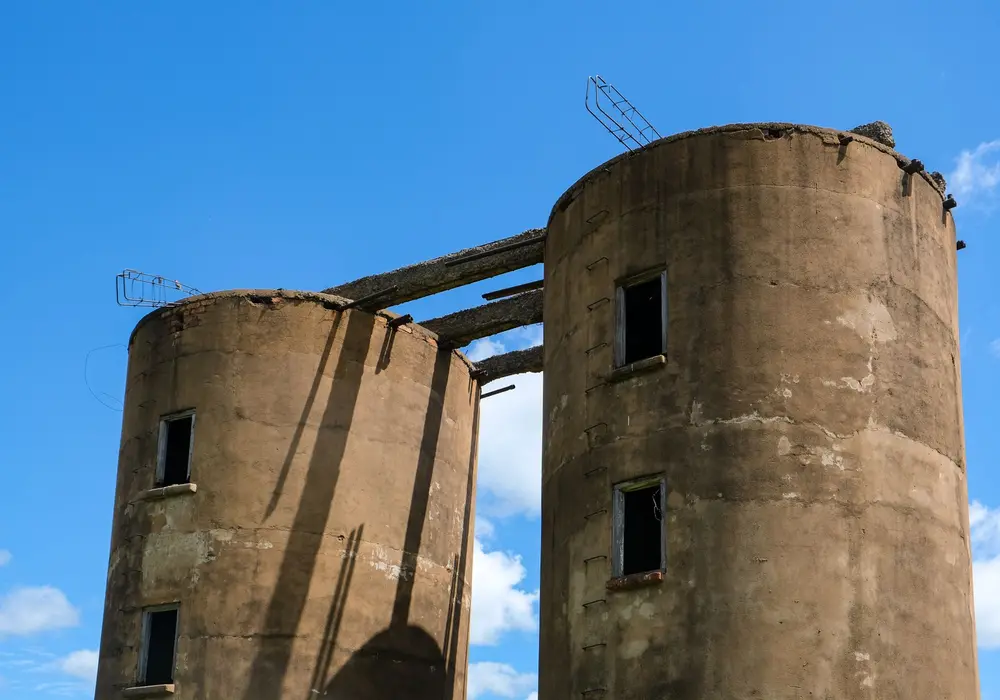
Each type comes down differently. A thin steel water tank is a quick shear job. A tall concrete stave silo held together by steel hoops needs a planned drop zone or a top-down approach, and a tank that held fuel or solvents has to be cleaned and certified safe before any cutting begins.
- Steel fuel, oil and chemical storage tanks
- Steel, concrete and redwood water tanks
- Stainless and concrete winery tanks
- Steel grain bins and feed silos
- Concrete stave silos and cement silos
- Hoppers and tower-mounted tanks
Cleaning, Degassing and Hot Work Clearance Before Cutting
Residues are the main hazard. Fuel, oil, solvents, fermentation gases and grain dust can all ignite or suffocate. A specialized tank cleaning contractor removes product and sludge and rinses the interior, and the waste is shipped under manifest. The atmosphere inside is then tested by a qualified person, and the tank is ventilated until readings are within safe limits before any torch or saw is used.
Even after cleaning, we prefer cold cutting with hydraulic shears wherever possible, since a shear produces no sparks. Torch cutting is reserved for heavy sections and only under a hot work permit with a fire watch. No one enters a tank or silo without a confined space plan, including atmosphere monitoring, a standby attendant and a rescue plan.
Fire Department and Environmental Health Rules for Tank Closure
Above-ground tanks that held fuel or hazardous materials are regulated locally, usually by the fire department or county environmental health acting as the unified program agency. Taking one out of service may require a closure notice or permit, and if a leak is suspected, the agency may want soil sampling under the tank pad after removal. We coordinate the timing so the inspector can see the pad before it is disturbed.
Underground tanks fall under a separate process and are covered on our underground storage tank removal page. Structures large enough to count as buildings, such as silos with attached headhouses, also need the BAAQMD Regulation 11 Rule 2 asbestos survey and air district notice, since old gaskets, insulation and roofing on these structures can contain asbestos.
How Tank and Silo Demolition Works, Step by Step
Identify Contents, History and Hazards
We find out what each tank or silo held, how long it has been out of service, and whether leaks are suspected. Height, wall thickness, nearby buildings and overhead lines shape the dismantling method.
Clean, Test and Obtain Permits
A cleaning contractor removes residues, the atmosphere is tested and the vessel ventilated, and any closure permit from the fire department or environmental health agency is secured. Hot work permits are issued if torch cutting is planned.
Dismantle the Silo or Tank Under a Sequence Plan
Shears and cranes take the structure apart from the top down, or it is dropped into a cleared zone when the site allows. Exclusion zones stay in place until every section is on the ground.
Recycle Steel and Close Out the Site
Steel goes to scrap, concrete to crushing, and pads and footings are removed if required. Inspectors can see the soil under fuel tanks, and receipts are collected for the closure file.
How Tall Tanks and Silos Are Brought Down
In open ground with a clear drop zone well beyond the structure's height, a silo or tank can be felled in a controlled direction after cuts weaken the base on one side. Near buildings, power lines or roads, that is not an option, so the structure is dismantled from the top down. A long-reach excavator with a shear or a crane holding sections as they are cut takes it apart piece by piece and lowers each one to the ground.
Concrete stave silos need particular care because their steel hoops are under tension. Releasing them in the wrong order can make staves fall unpredictably. Steel grain bins are lighter but can buckle suddenly once the sidewall is cut. Our sequence plan for each structure spells out cut order, exclusion zones and where debris will land before work begins.
Scrap Value and Recycling for Steel Tanks and Silos
Steel tanks and bins are mostly recyclable metal, and stainless winery tanks are worth more per pound than carbon steel. Scrap value can offset part of the demolition cost, and we discuss how it is accounted for when we quote. Concrete staves, tank pads and foundations are broken up and crushed into base rock. Redwood staves from old water tanks are often sound enough to resell as reclaimed lumber.
Thanks to the high metal content, tank and silo jobs easily exceed the CALGreen 65 percent diversion requirement. Residues, sludge and coated or insulated materials that cannot be recycled are disposed of separately, with paperwork that goes into the project file.
Related Specialty Demolition Services
Specialty Demolition
Emergency Demolition
Soft-Story Retrofit Demolition
Deconstruction & Salvage
Barn & Agricultural Demolition
Dock & Pier Demolition
Tank & Silo Demolition Across the San Francisco Bay Area
Can you remove a tank that still has fuel or product in it?
Not until it is emptied. A tank cleaning contractor removes and manifests the remaining product and sludge, and the interior is tested before we cut. We can coordinate that cleaning as part of the project.
Does an above-ground tank need a permit to be removed?
Tanks that held fuel or hazardous materials usually involve the fire department or county environmental health. Water tanks and grain bins are simpler, though a silo attached to a building may still need a demolition permit.
Does the scrap value of the steel reduce the price?
It can. Scrap value depends on weight, type of metal and market conditions. We explain in the quote how the scrap is factored in.
How close to other buildings can a silo be taken down?
Quite close, using top-down dismantling with a long-reach excavator or crane instead of felling it. The exclusion zone and sequence are planned around the nearby structures and any overhead lines.
Request a Tank and Silo Demolition Quote
Call (510) 826-3578 or request a quote with the location, the number and size of tanks or silos, and what they held. We reply to form requests within one business day.
- Email: contact@sfbayareademolitioncontractor.com
- Serving all 9 Bay Area counties from San Jose