

Masonry Chimney Removal
Chimney Removal for Bay Area Homes: Brick, Block and Stone
A brick chimney is one of the heaviest parts of a house and stands taller than anything else on it. In earthquake country, many owners would rather take it down on their own schedule than wait for the next quake to decide.
Why Masonry Chimneys Come Down in Earthquake Country
Unreinforced brick chimneys are among the most vulnerable parts of an older Bay Area house. They were built before modern seismic design, often with lime mortar that has weakened over the decades, and they rise high above the roof with little to hold them in place. Earthquakes in the region have repeatedly cracked and toppled them, sending brick through roofs and into yards and driveways.
Other reasons are practical. A chimney with cracked crowns, failing mortar or a leaning stack may cost more to repair than to remove. Owners switching to electric heating, or remodeling a living room, may not need the fireplace at all. Some cities and insurers also encourage replacing heavy masonry with a lightweight metal flue and framed chase when a fireplace is kept.
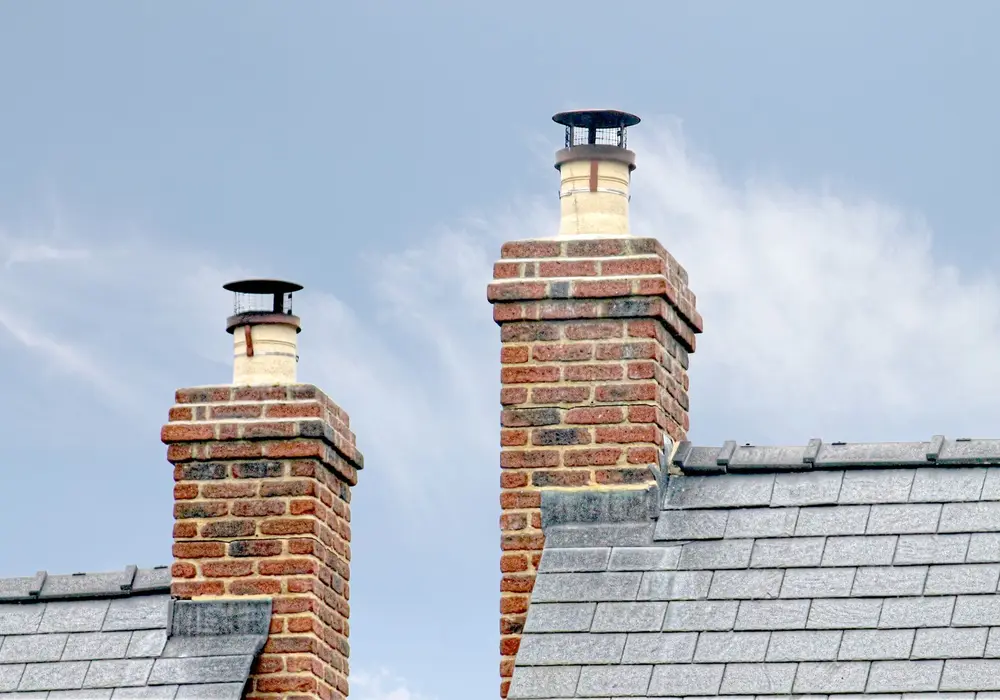
Chimney Removal Below the Roofline vs. Full Removal
The two common scopes are partial and full. A partial removal takes the chimney down to below the roofline, usually to the attic floor or the top of the firebox, and closes the roof opening. It removes the part most likely to fall in an earthquake and costs less, since the firebox, hearth and lower stack stay in place. Full removal takes the entire chimney down to the foundation, including the firebox, hearth and the footing beneath them.
Full removal is the choice when you are remodeling the room, when the lower masonry is also cracked, or when the chimney footing is failing. It means more work inside the house: the wall around the fireplace opens up, the floor where the hearth sat needs framing, and the exterior wall needs siding. Your contractor or designer usually decides which scope fits the larger plan.
- Partial: chimney cut to below the roof, opening closed
- Full: stack, firebox, hearth and footing removed
- Firebox may stay as a decorative or gas insert opening
- Footing removal opens the crawlspace or slab
How a Chimney Is Taken Apart Brick by Brick
Chimneys come down from the top, by hand. A crew on scaffolding or on the roof with fall protection removes the crown and cap, then works down course by course with chisels and hammers. Loose bricks are lowered in buckets, passed down a debris chute into a bin or trailer, or stacked on the scaffold and lowered. Dropping masonry onto the roof or the ground below is avoided because it damages the roof, the yard and anything nearby.
Inside the house, the fireplace opening is sealed with plastic and the floor is covered, since soot and mortar dust travel far. When the stack reaches the roofline, the crew works from the attic as well, cutting the masonry free of any framing it touches. Excavators are rarely used on chimneys attached to houses; the risk of the stack falling the wrong way is too great.
How Chimney Removal Works, Step by Step
Chimney Inspection and Removal Scope
We look at the chimney from the roof, attic and inside the house, check flues, crown, mortar and footing, and help you decide between removal below the roofline and full removal.
Permit, Gas Shutoff and Material Testing
Permits are confirmed, any gas line to a fireplace insert is capped, and suspect materials in the flue or firebox are sampled. Abatement is scheduled first if testing finds asbestos.
Top-Down Chimney Demolition by Hand
From scaffolding or a secured roof position, the crew removes the crown and works down course by course, lowering brick by bucket or chute while protecting the roof and interior.
Close the Roof and Clean Up Chimney Debris
Roof and floor openings are framed and sheathed weather-tight, the firebox is capped if it stays, and brick and mortar are hauled to recycling. Your roofer finishes the surface.
Roof, Attic and Firebox Work After Chimney Demolition
Removing the chimney leaves openings. In the roof, the hole where the stack passed through needs framing, sheathing and roofing to match the surrounding area. In the attic, any framing that was notched around the chimney may need reinforcement. If the firebox stays, it is capped at the top and sealed so it does not draw air or moisture into the house.
We frame and sheath the roof opening and leave it weather-tight, then coordinate with your roofer to finish the surface. On a full removal, the floor opening at the hearth is framed and the exterior wall is sheathed, ready for siding. Flashing that was set into the chimney is removed with it, so the roofer installs new flashing where needed.
Chimney Removal Permits, Gas Lines and Asbestos Checks
Many cities require a permit for chimney removal, especially full removal or any work that changes the roof structure. Some cities have programs or streamlined permits for seismic chimney work. We check with your building division during the quote. Because chimney removal is partial demolition of the house, the asbestos survey may also be required before work starts.
Older chimneys and fireplaces sometimes contain asbestos in flue liners, cement flue pipe, fireplace insulation or the gaskets of old inserts. A certified consultant samples suspect materials, and a certified abatement contractor removes anything that requires it. If the fireplace has a gas log or insert, the gas line is shut off and capped by a plumber or the gas utility before demolition begins.
What Determines Chimney Removal Cost
Height, the number of flues and the scope (partial or full) set most of the price. A tall two-story chimney with two flues takes much longer than a short single-story stack. Roof pitch and access affect scaffolding needs. Stone chimneys take longer to dismantle than brick. Full removal adds firebox, hearth and footing work, plus framing to close openings. Any abatement, gas line work and roof finishing are added to the base scope.
Related Residential Demolition Services
Residential Demolition
House Demolition
Garage Demolition
Shed & Outbuilding Removal
Deck & Patio Cover Demolition
Swimming Pool Removal
Mobile Home Demolition
Fire-Damaged Home Demolition
Partial Home Demolition
Chimney Removal Across the San Francisco Bay Area
Should I remove my chimney to the roofline or all the way?
Removing to below the roofline eliminates the part most likely to fall in an earthquake and costs less. Full removal makes sense when remodeling the room or when the lower masonry is also damaged.
Can I keep the fireplace after the chimney is removed?
Yes, with a lightweight metal flue and framed chase replacing the masonry above the firebox. A fireplace installer handles the new venting after we remove the old stack.
Do I need a permit to remove a chimney?
Many Bay Area cities require one, especially for full removal or roof changes. We confirm the requirement with your building division before scheduling.
Will chimney removal damage my roof?
The roof around the chimney is protected, and the opening is framed and sheathed weather-tight. The roofer then installs new roofing and flashing to finish the area.
Get a Chimney Removal Quote
How tall is the chimney, and is it one story or two? Put that in a quote request or call (510) 826-3578, and we will reply within one business day.
- Email: contact@sfbayareademolitioncontractor.com
- Serving all 9 Bay Area counties from San Jose