

Barn & Agricultural Demolition
Barn and Agricultural Building Demolition for Bay Area Farms and Ranches
Old barns, pole sheds, dairy parlors and winery outbuildings sit on rural parcels with long gravel roads, livestock, vines and fire season to work around. We plan the teardown around the operation that keeps running beside it.
Farm and Ranch Structures We Demolish
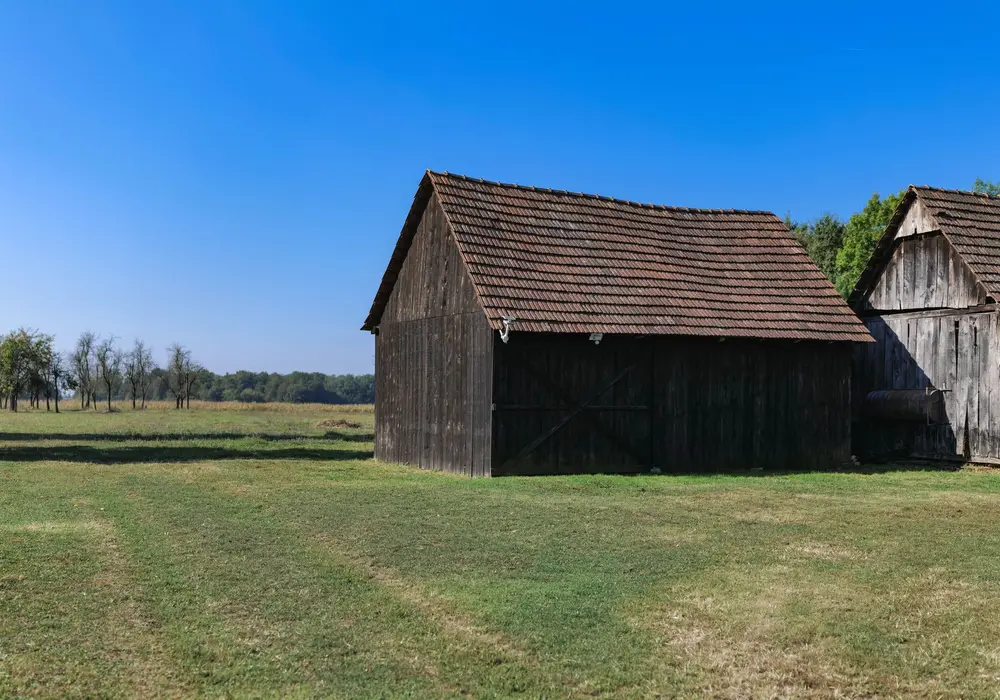
Agricultural demolition spans a wide range of buildings, from a sagging hay barn with hand-hewn posts to a modern steel equipment shed. In Sonoma and Napa counties we see redwood barns, old prune dryers and winery outbuildings. In Solano, eastern Contra Costa and the south end of Santa Clara County, the work is more often pole barns, dairy and poultry buildings, and metal Quonset huts. Coastside parcels in San Mateo County tend to have greenhouses and packing sheds.
The structures are often simple, but the surroundings are not. A barn may share a fence line with a pasture, sit fifty feet from a wellhead, or block the only way through a vineyard block. Many have been patched, added onto and reroofed several times, so the materials inside can be a surprise.
- Timber hay barns and horse stables
- Pole barns and equipment sheds
- Dairy parlors, poultry houses and feed rooms
- Quonset huts and steel ag buildings
- Greenhouses and packing sheds
- Winery outbuildings and old dryers
County Permits for Barn Demolition on Unincorporated Land
Most farm and ranch parcels are outside city limits, so the demolition permit comes from the county's building or permit department rather than a city. Some counties exempt certain agricultural buildings from building permits when they are built, but removing one usually still needs a permit, and the county may ask about septic systems, wells and creek setbacks on the same parcel. Barns old enough to have historic interest may be reviewed before a permit is issued in some counties.
Wells that are being abandoned must be destroyed under a permit from county environmental health, and septic tanks that are no longer used are pumped and abandoned or removed as the county directs. We identify these early so they can be handled during the same mobilization instead of on a separate trip.
Asbestos Roofing, Lead Paint and Farm Chemical Residues
Corrugated cement asbestos panels were a common roof and siding material on ag buildings for decades, and they look a lot like fiber cement or metal from a distance. Before any barn comes down, Regulation 11 Rule 2 calls for a survey by a certified asbestos consultant and a demolition notice filed with BAAQMD. Any asbestos panels are removed intact by a state-certified abatement contractor we bring in, since breaking them with a machine would release fibers across the field.
Barn paint is often lead-based. Old farm buildings also collect pesticide containers, used oil, batteries, fuel cans and tires. These are pulled out, identified and taken for proper disposal before the structure comes down, so they do not end up mixed with wood and metal headed for recycling.
How Barn and Agricultural Demolition Works, Step by Step
Walk the Farm Site and Plan Truck Access
We look at the barn, the road in, where trucks can turn around, and what has to be protected: wells, septic, irrigation, fences, vines and animals. Salvage the owner wants to keep is marked at the same time.
Survey, Abate and Clear Out Contents
Once the consultant's report is back and the air district has its notice, a state-certified abatement crew lifts off any cement asbestos panels whole. Chemicals, fuel, tires and old equipment are cleared out, and power to the barn is disconnected.
Salvage, Then Machine Demolition
Valuable boards and timbers are removed by hand. An excavator with a thumb then pulls the roof and walls inward, keeping debris inside the footprint and away from pasture, fencing and nearby buildings.
Remove Floors, Haul and Restore the Pad
Concrete floors and footings are broken out if the owner wants them gone, wood and metal go to recycling, and the area is rough graded to drain. Erosion control goes in when the rainy season is near.
Working Around Livestock, Vines and Fire Season
Timing matters on a working property. We avoid harvest and crush in wine country, keep gates closed behind every truck, and agree in advance where equipment can park so it stays off irrigation lines and vine rows. Animals are moved out of the nearby pasture before the heavy work starts, since noise and falling debris spook horses and cattle.
Dry summer grass and wildland-urban interface zones make fire a real risk. During fire season we keep a water truck or tank on site, clear grass from around equipment, avoid torch cutting on high-fire-danger days, and follow any red flag warnings. Winter brings the opposite problem: soft ground and runoff, so roads may need rock and erosion controls go in near creeks and drainage ditches.
Salvaging Barn Wood, Metal Roofing and Concrete Floors
Weathered barn siding, heavy timber posts and beams have a market as reclaimed wood, and many owners want to keep some for a new building or furniture. Boards are removed by hand where they are worth saving, before the machine takes down the frame. Corrugated metal roofing and steel framing go to scrap, and concrete floors, stall curbs and footings are broken out and crushed into base rock.
Burning the debris is not an option. Air district rules restrict open burning, and demolition debris cannot be burned on the property. Hauling and recycling are the path for everything, and on a remote ranch, the distance to the nearest recycling yard can be one of the larger cost drivers.
Related Specialty Demolition Services
Specialty Demolition
Emergency Demolition
Soft-Story Retrofit Demolition
Deconstruction & Salvage
Dock & Pier Demolition
Tank & Silo Demolition
Barn & Agricultural Demolition Across the San Francisco Bay Area
Do I need a permit to tear down an old barn on my land?
Usually yes, from the county if the parcel is unincorporated or the city if it is inside city limits. Even if the barn was built without a permit, removing it typically needs one, along with the asbestos survey and air district notice.
Can I just burn the barn debris on site?
No. Air district rules restrict open burning, and demolition debris is not allowed to be burned. The material has to be hauled, and most of it can be recycled.
Is old barn wood worth anything?
Often it is. Weathered siding and large posts and beams are sought after as reclaimed wood. Value depends on species, condition and how much is sound. We can remove it carefully for you to keep or sell.
Can you remove the concrete floor and footings too?
Yes. We break out slabs, stall curbs and footings and haul the concrete to be crushed and recycled. If you plan a new building, we can leave the pad rough graded and compacted to your engineer's direction.
Request a Barn Demolition Quote
Call (510) 826-3578 or request a quote with the parcel address, the size and roofing of the barn, and how trucks reach it. We reply to form requests within one business day.
- Email: contact@sfbayareademolitioncontractor.com
- Serving all 9 Bay Area counties from San Jose